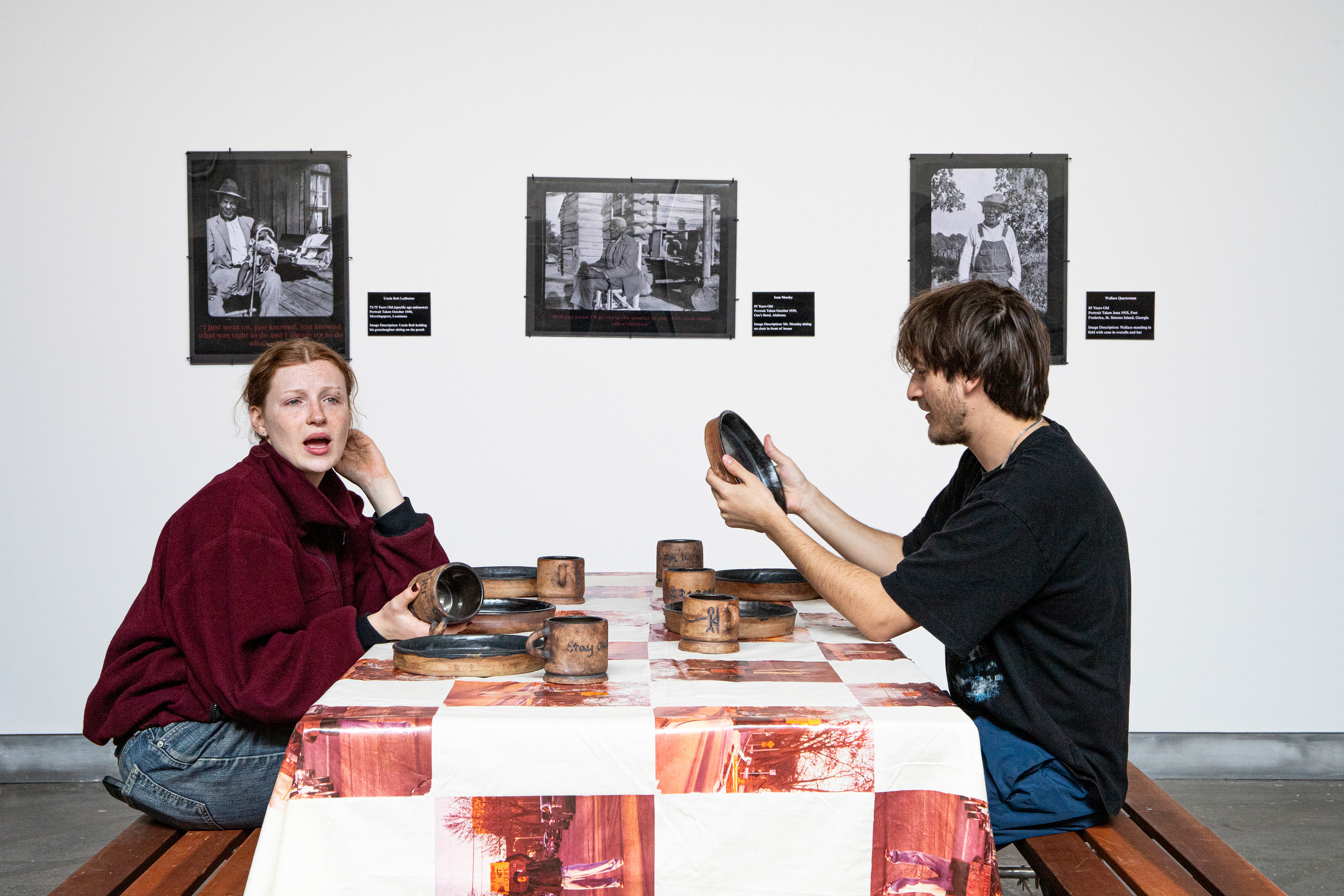
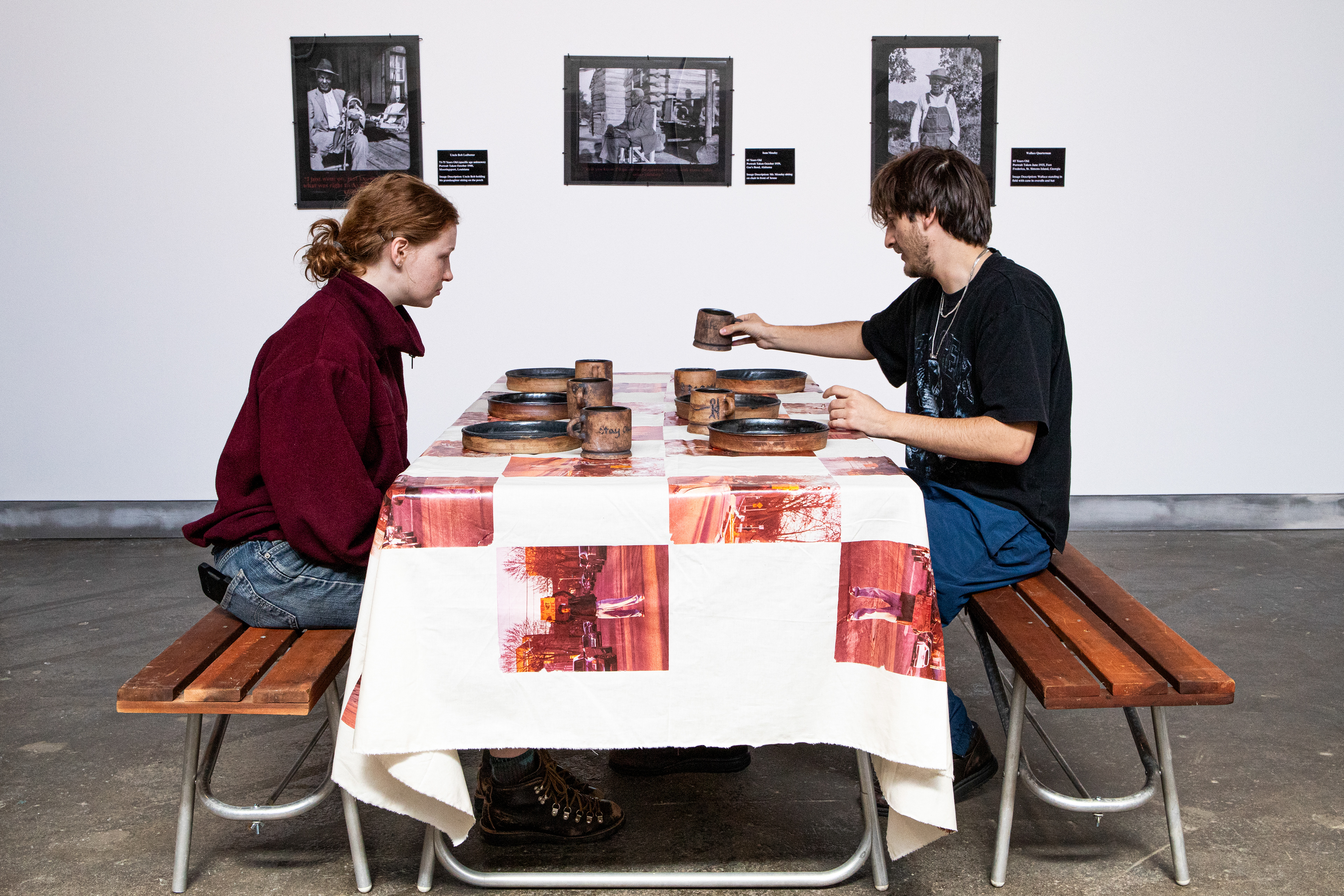
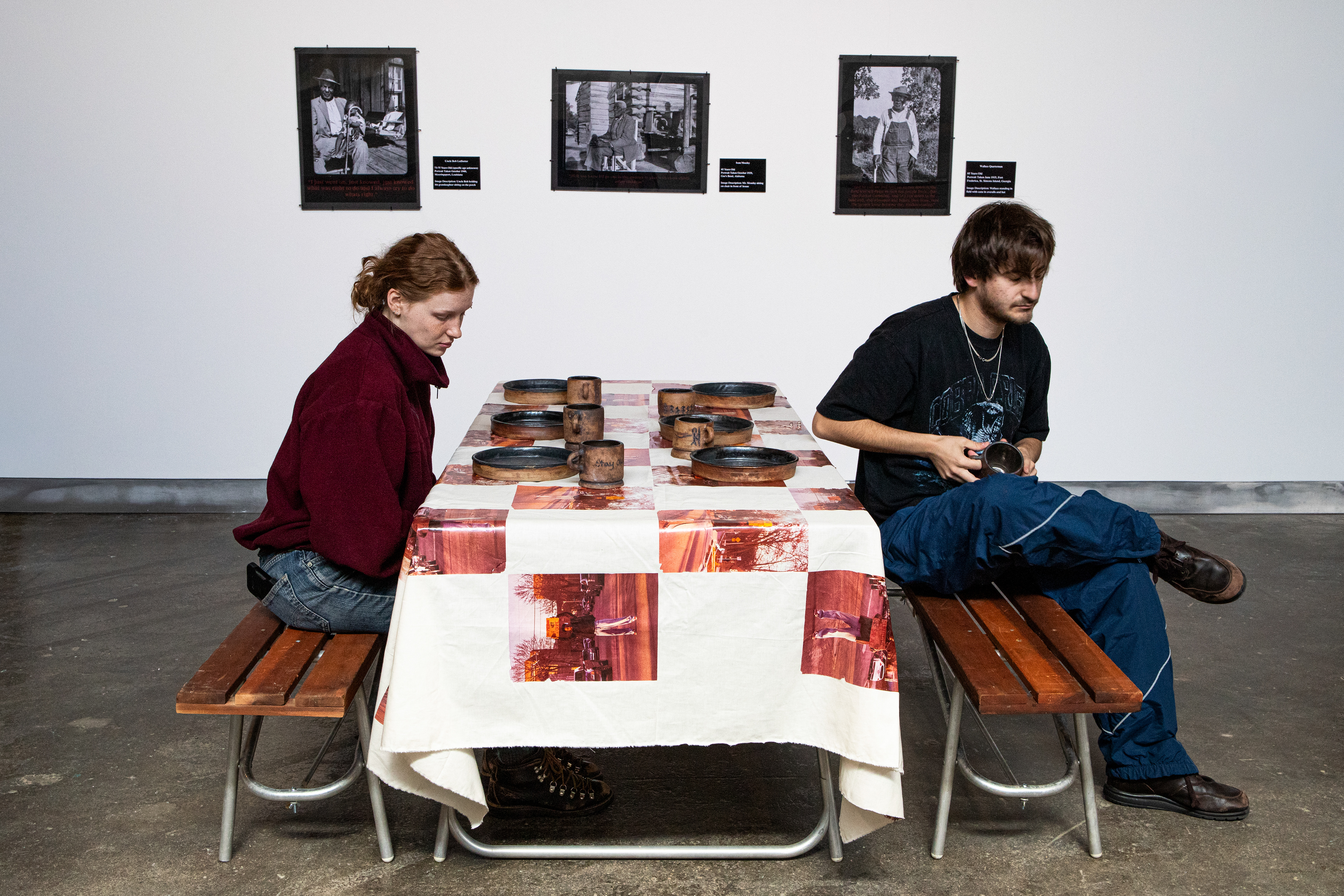
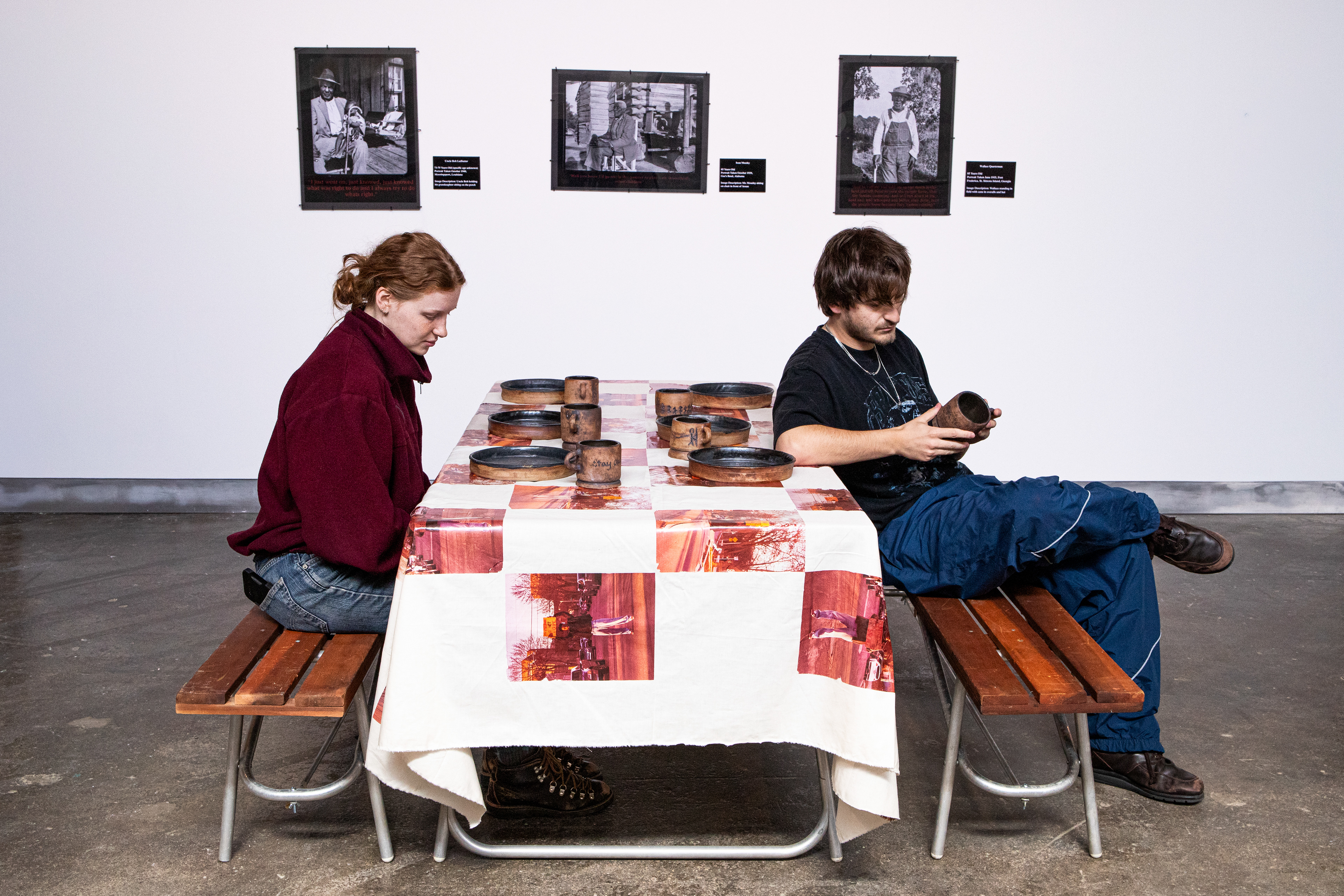
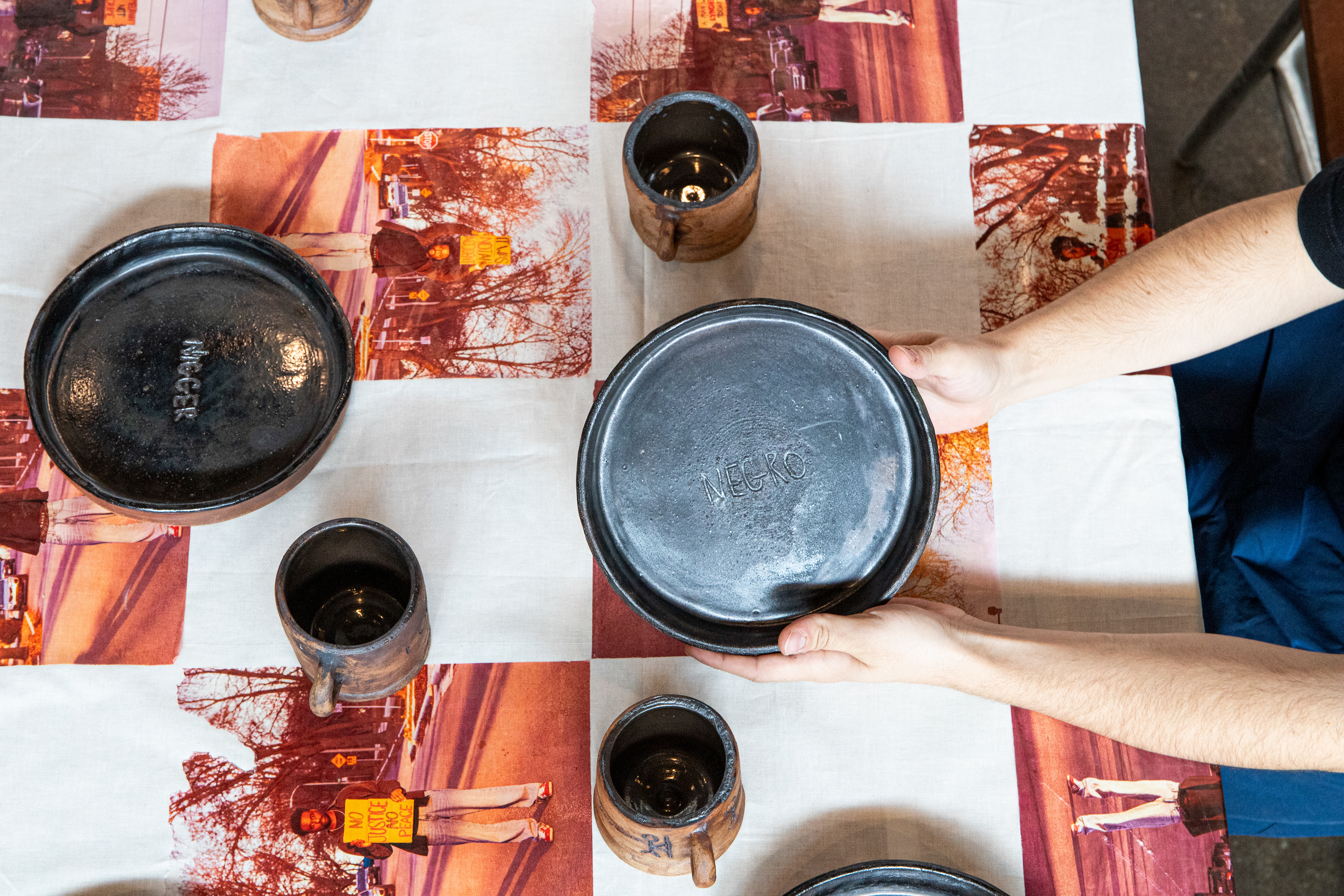
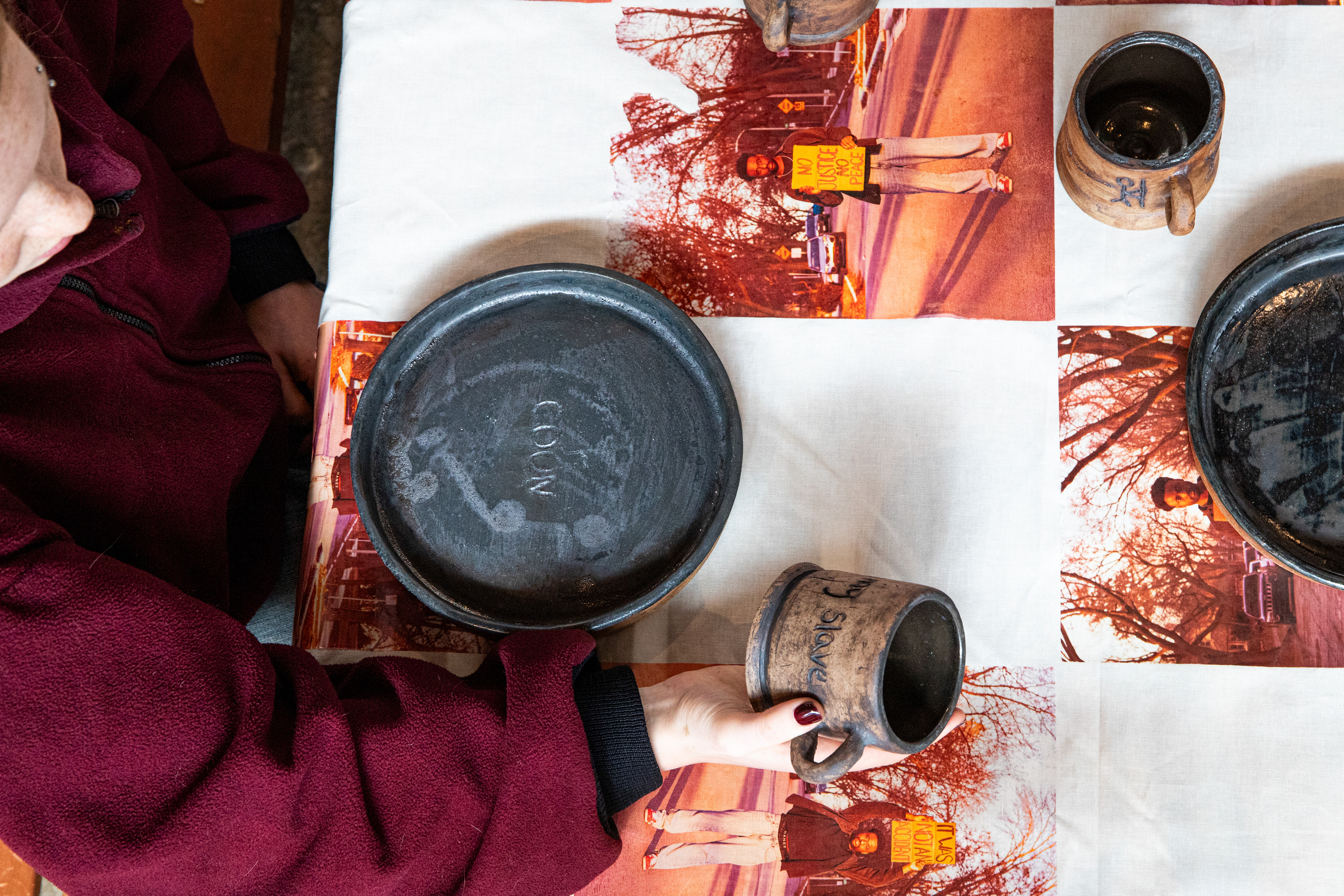
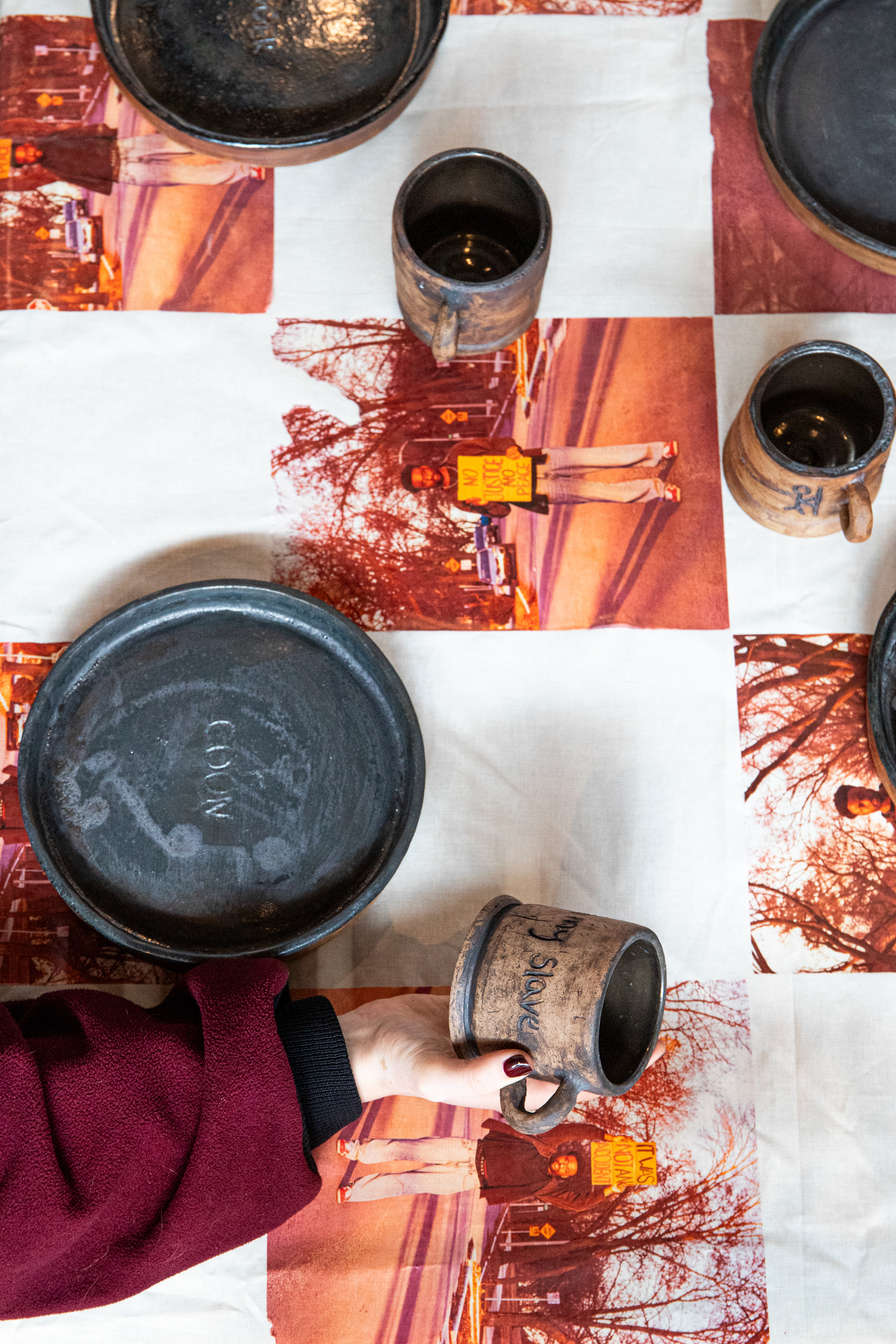
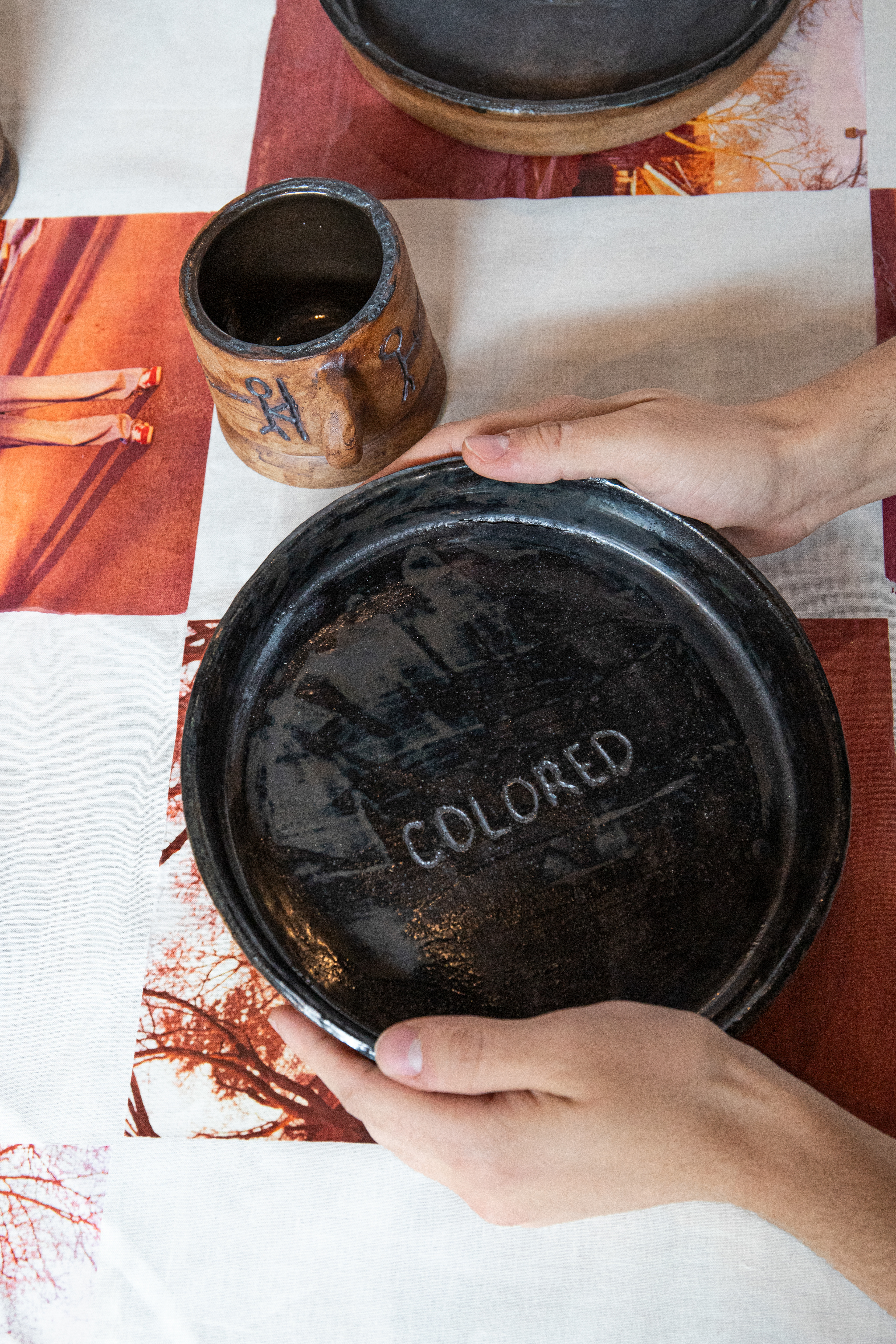
“Picnic” comes from the French word pique-nique, a public outdoor potluck. Picnics became popular in America in the 1800s and were often associated with gatherings to witness and even celebrate public lynchings of Black people. Over the course of 11 years, from 1865 to 1876, more than 2,000 Black men, women, and children were lynched, according to the NAACP. Many of those lynchings took place at picnics that included not just the white men who carried out the lynchings, but also entire families and communities in a public celebration.
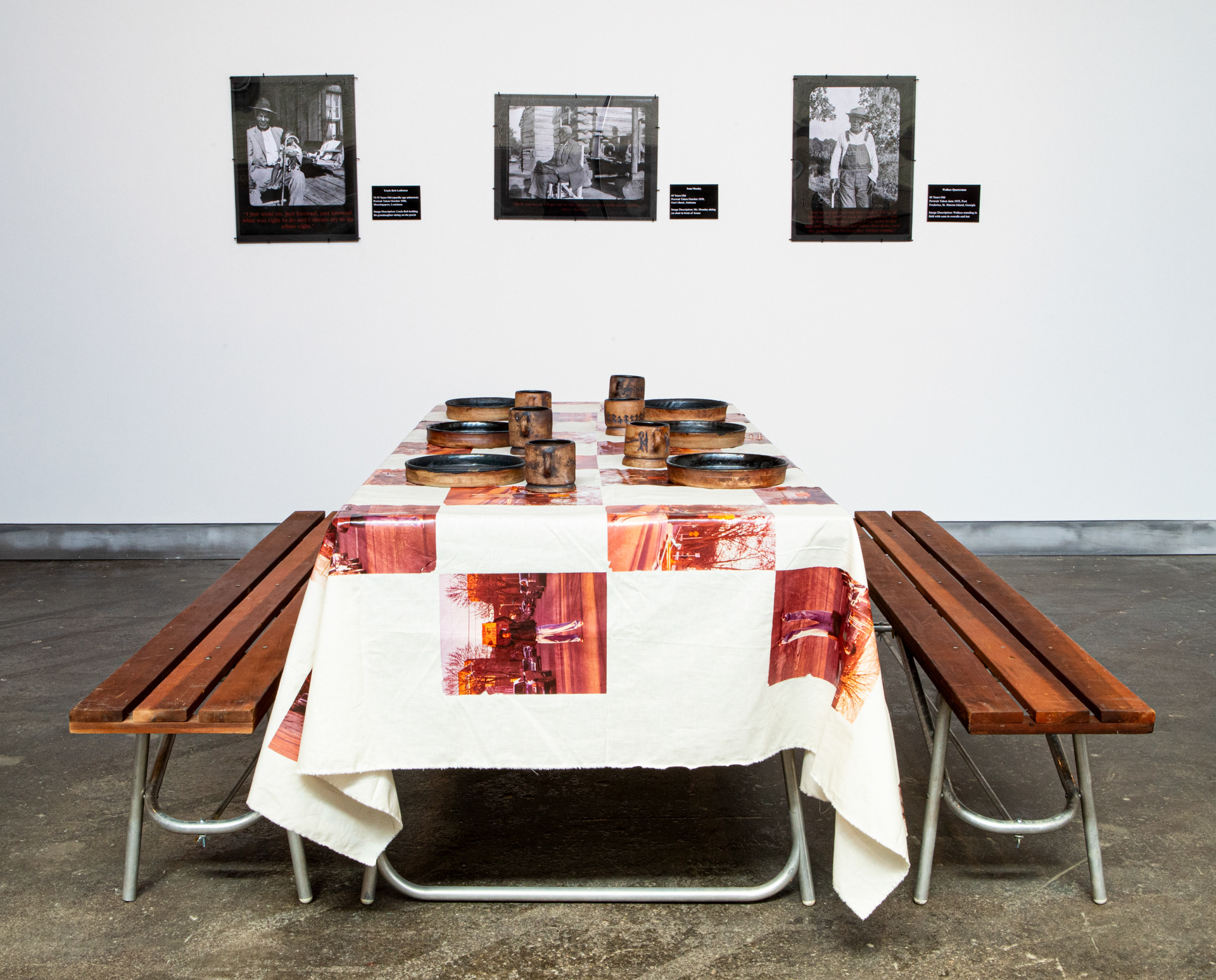
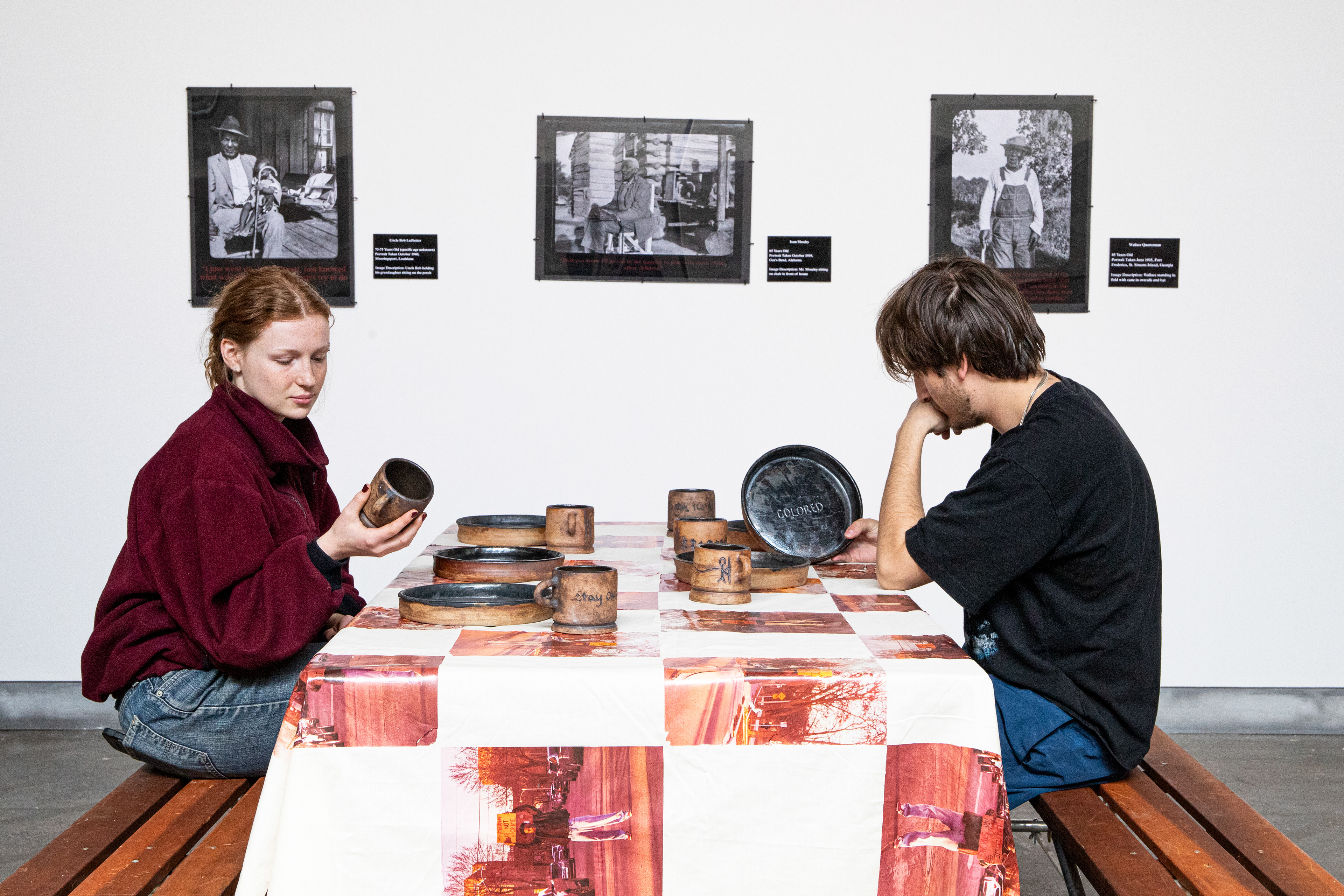
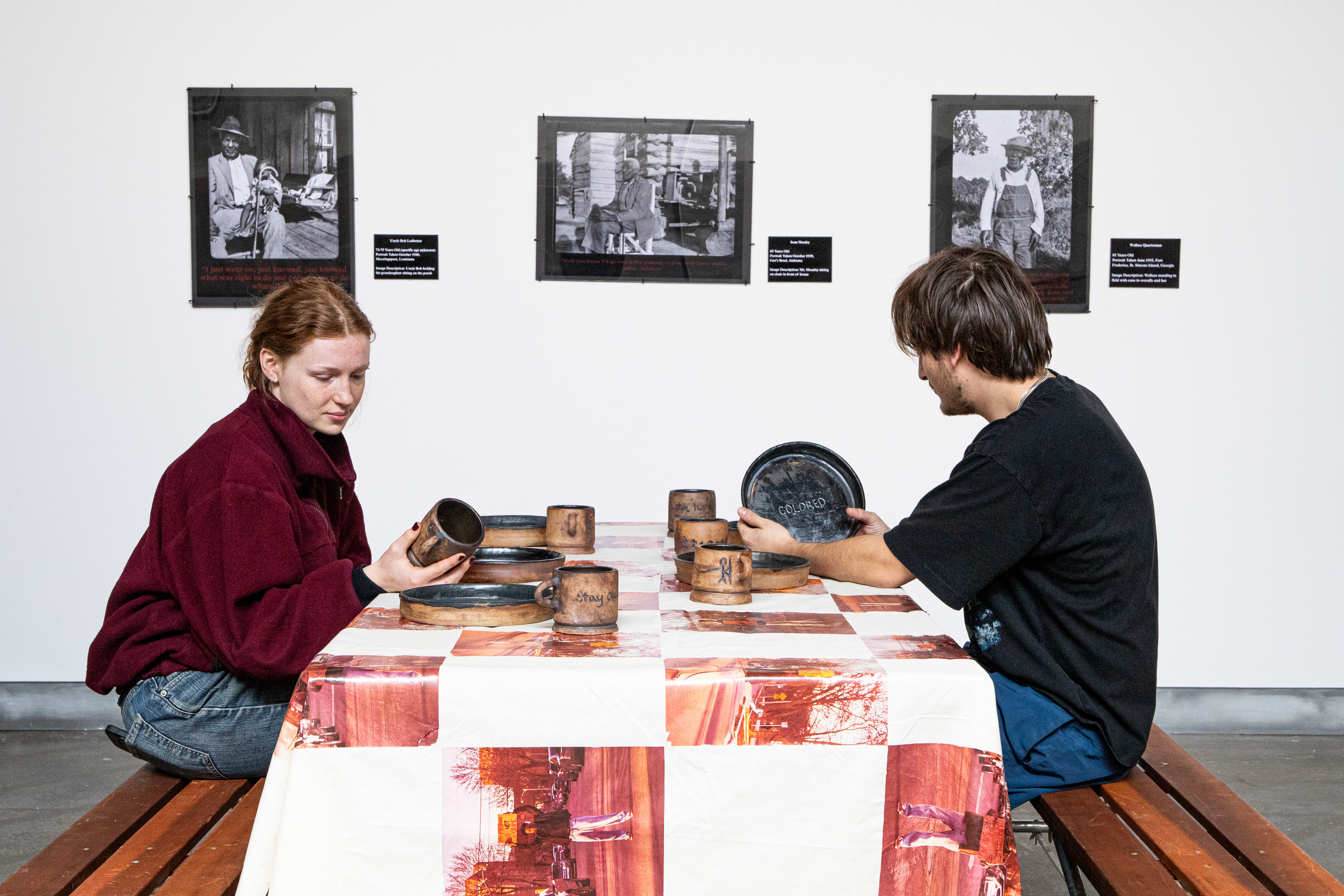
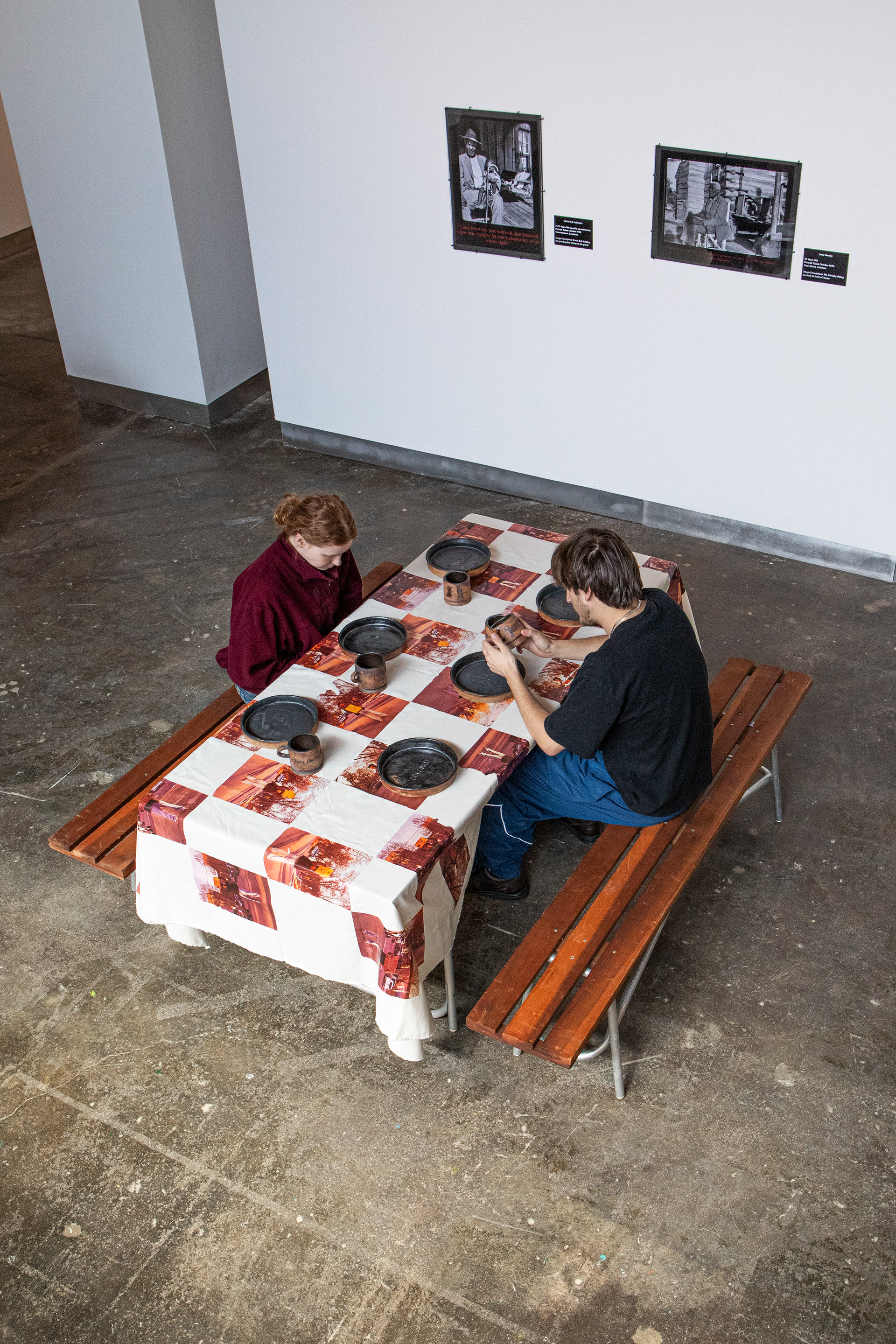
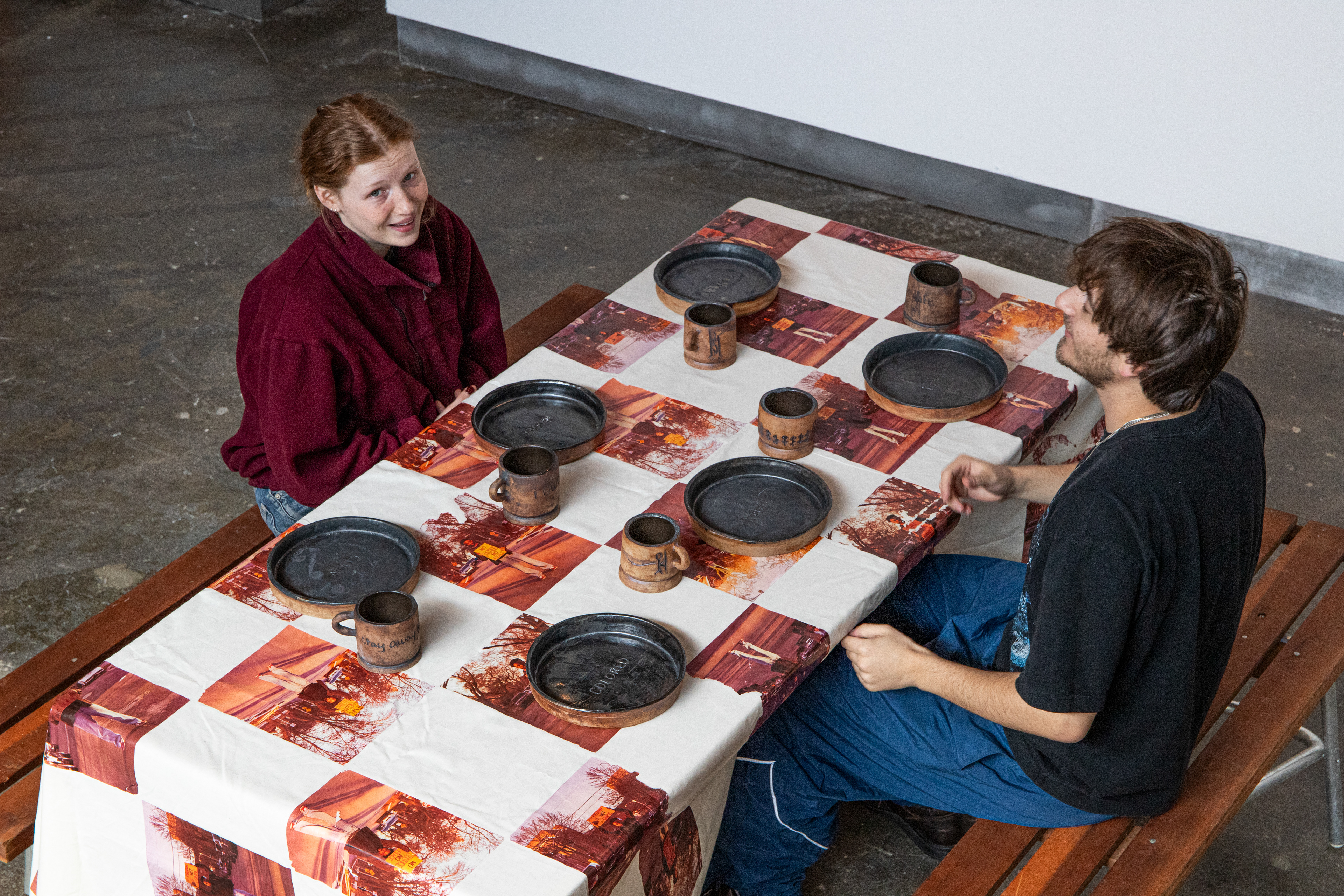
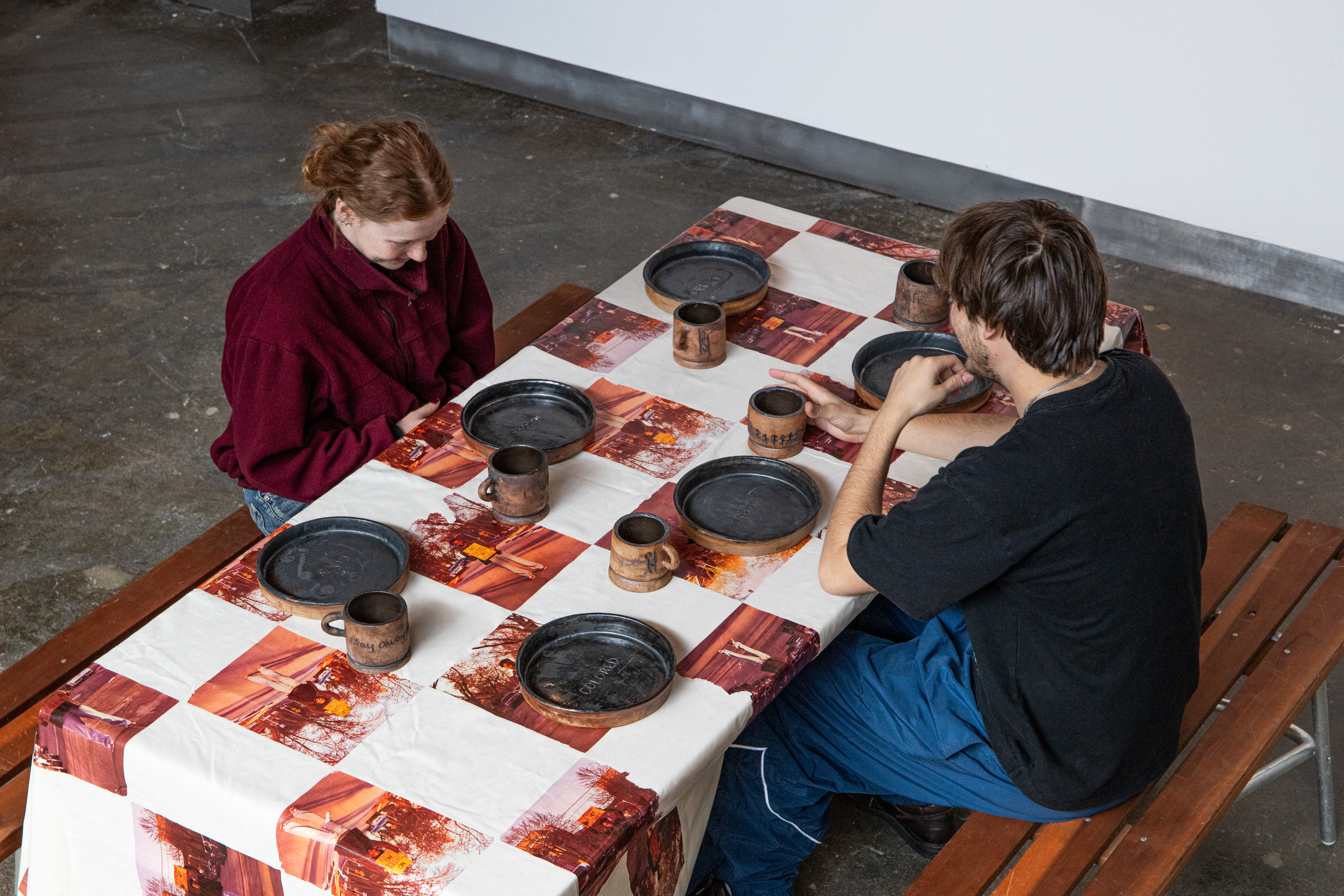
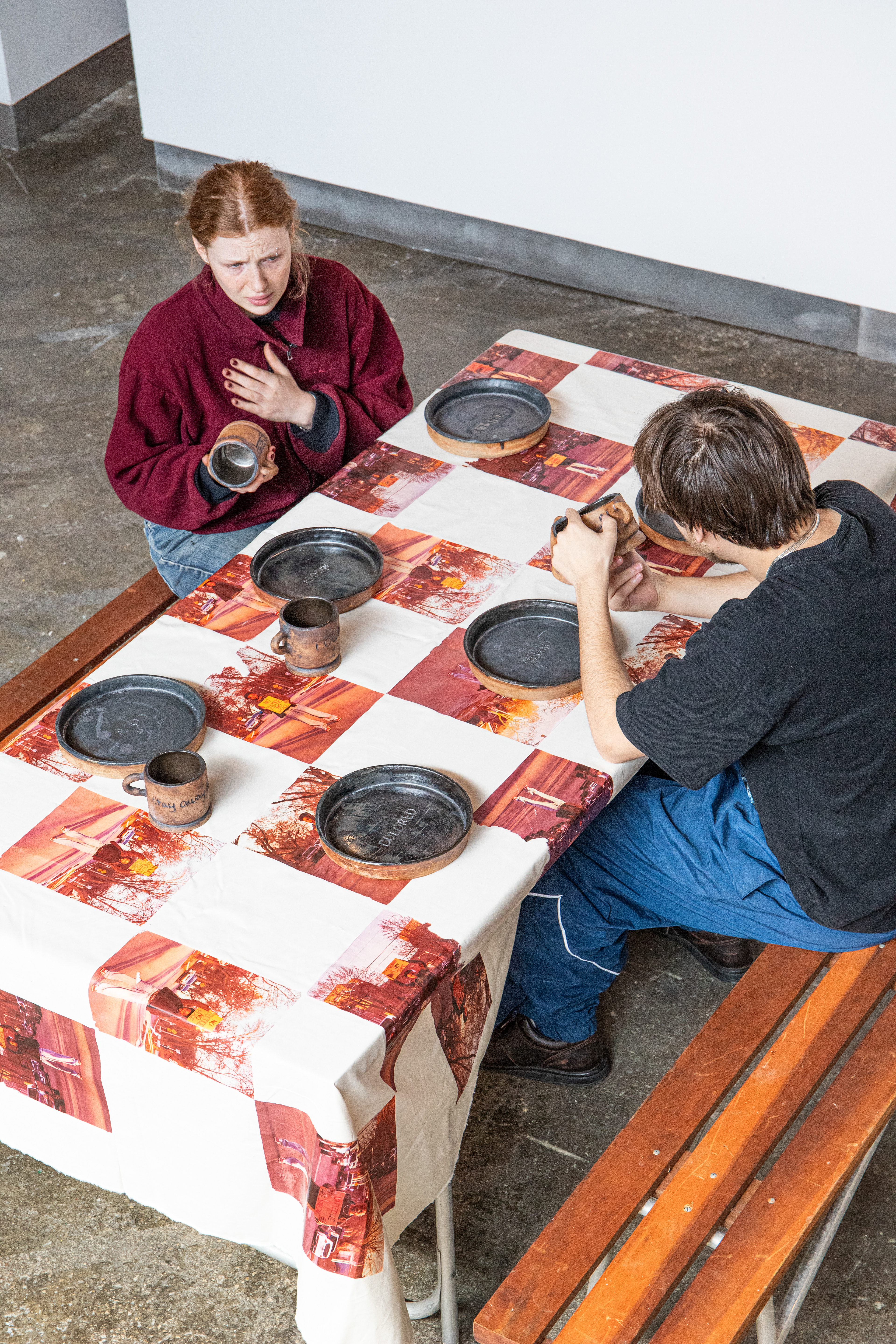
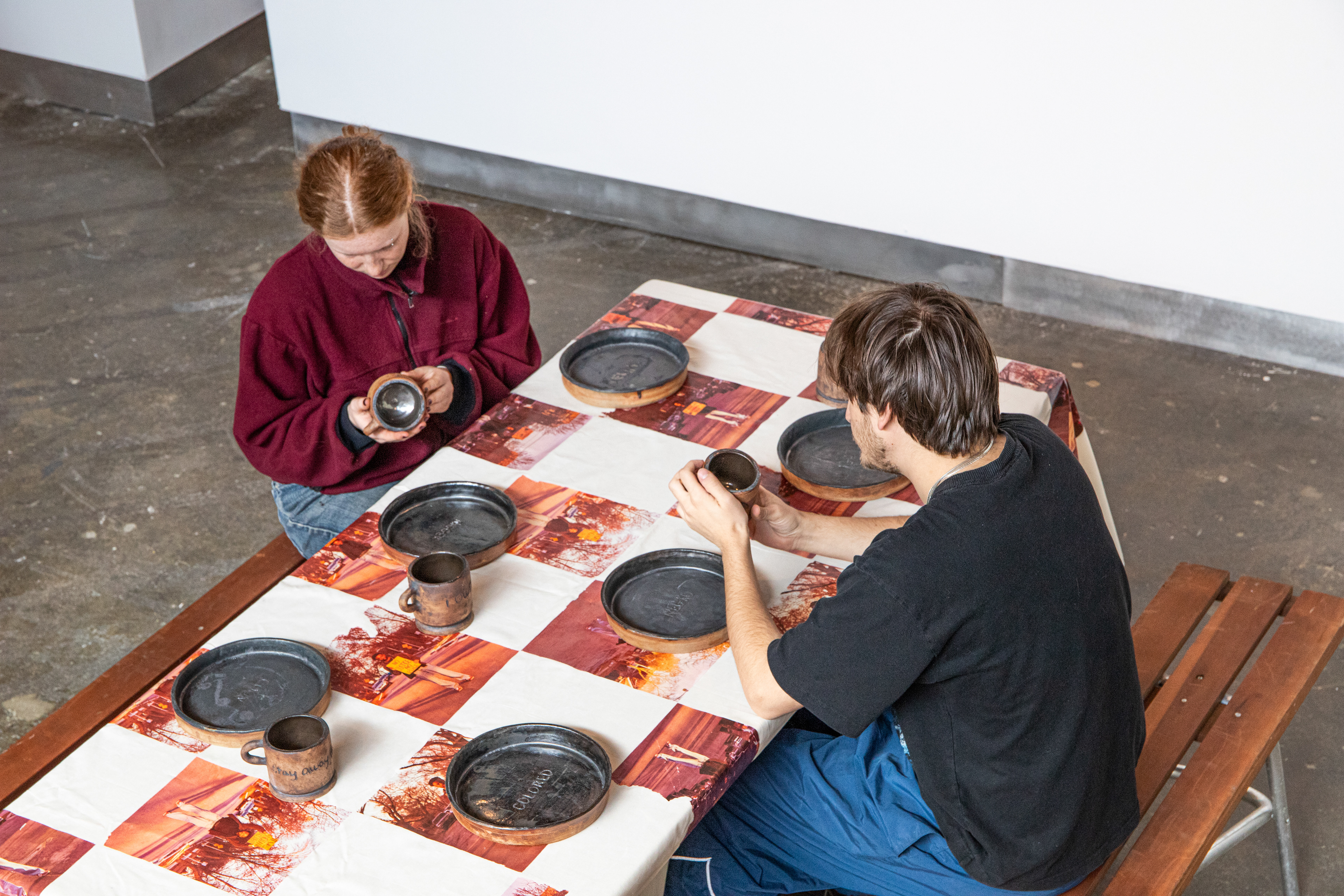
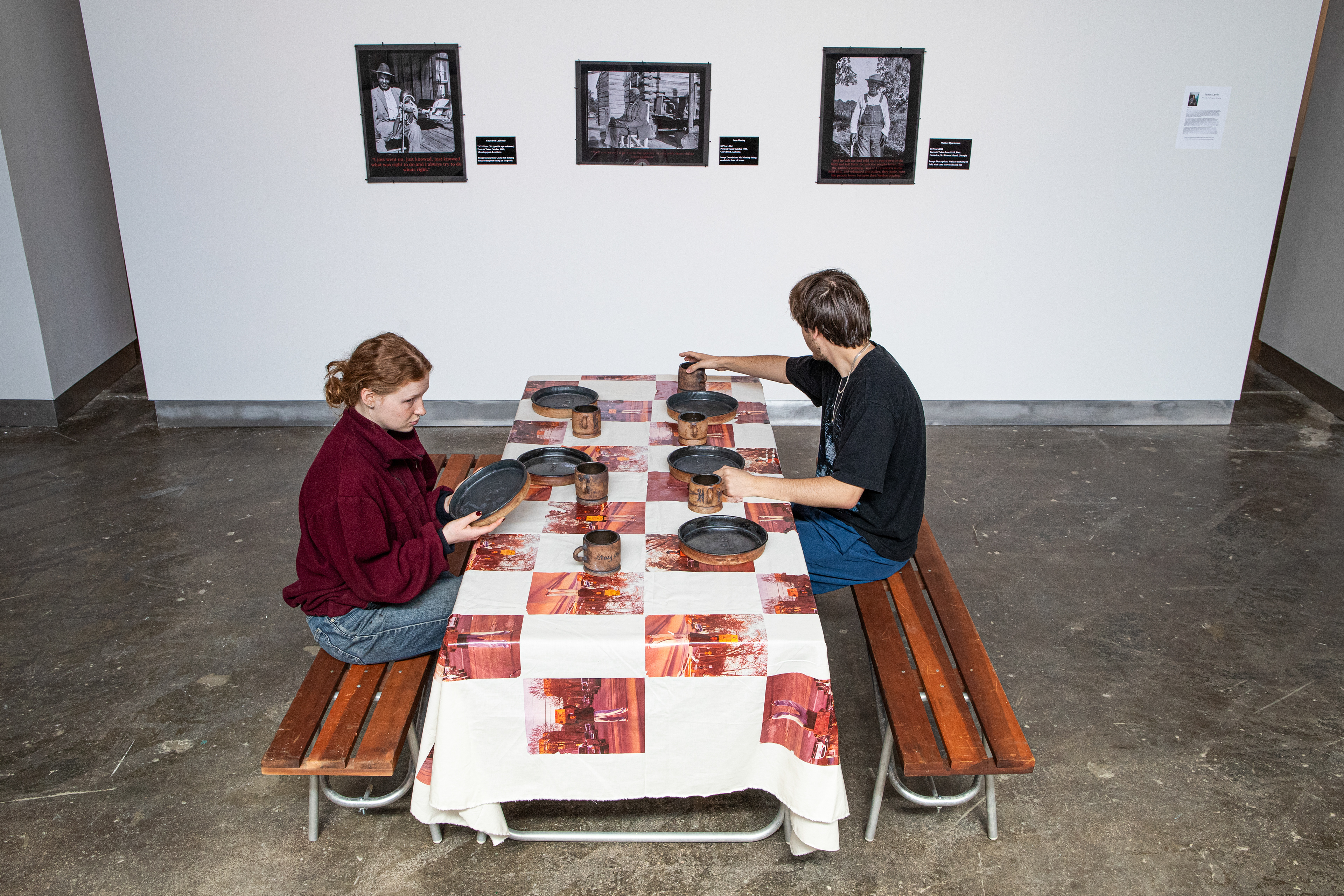
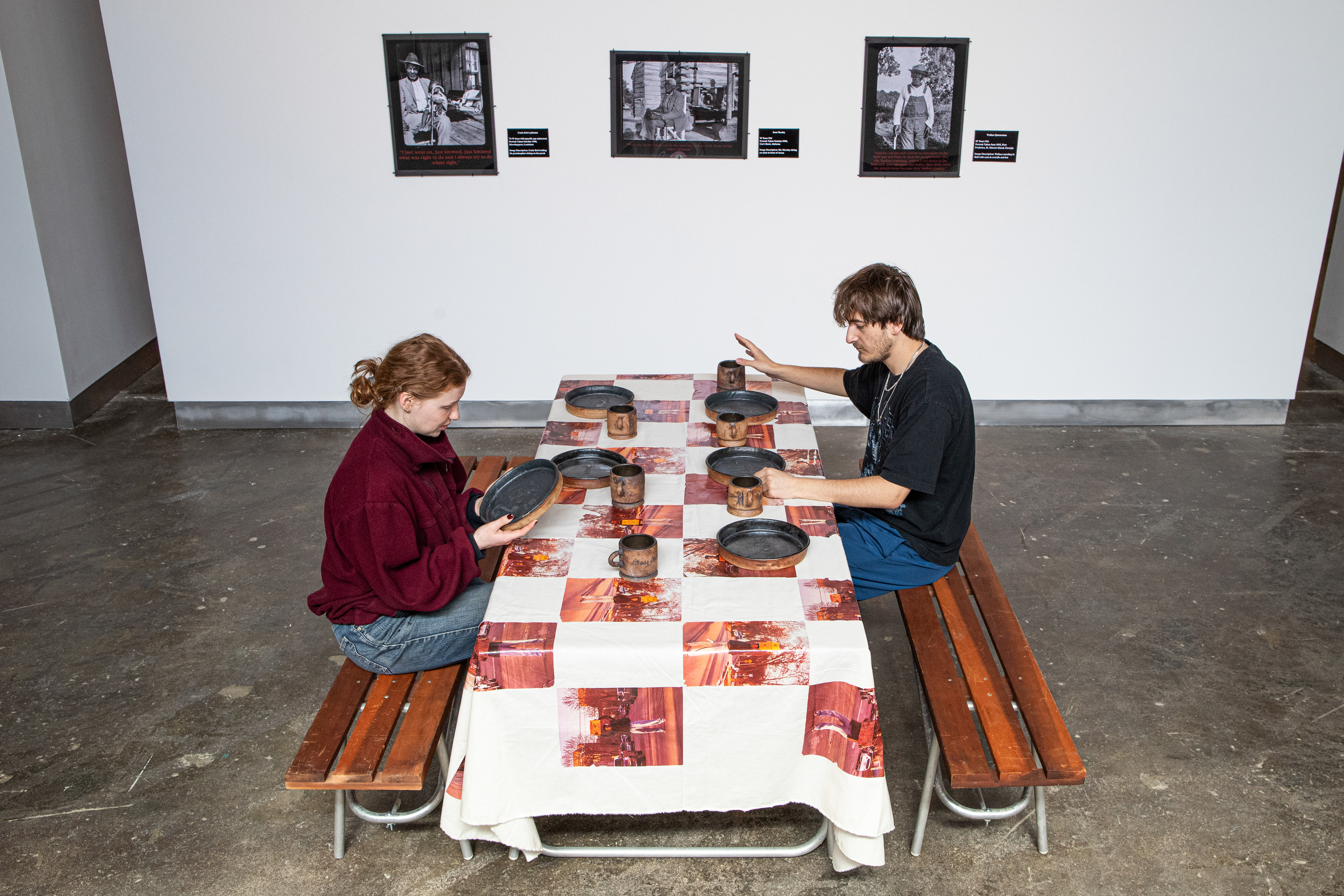
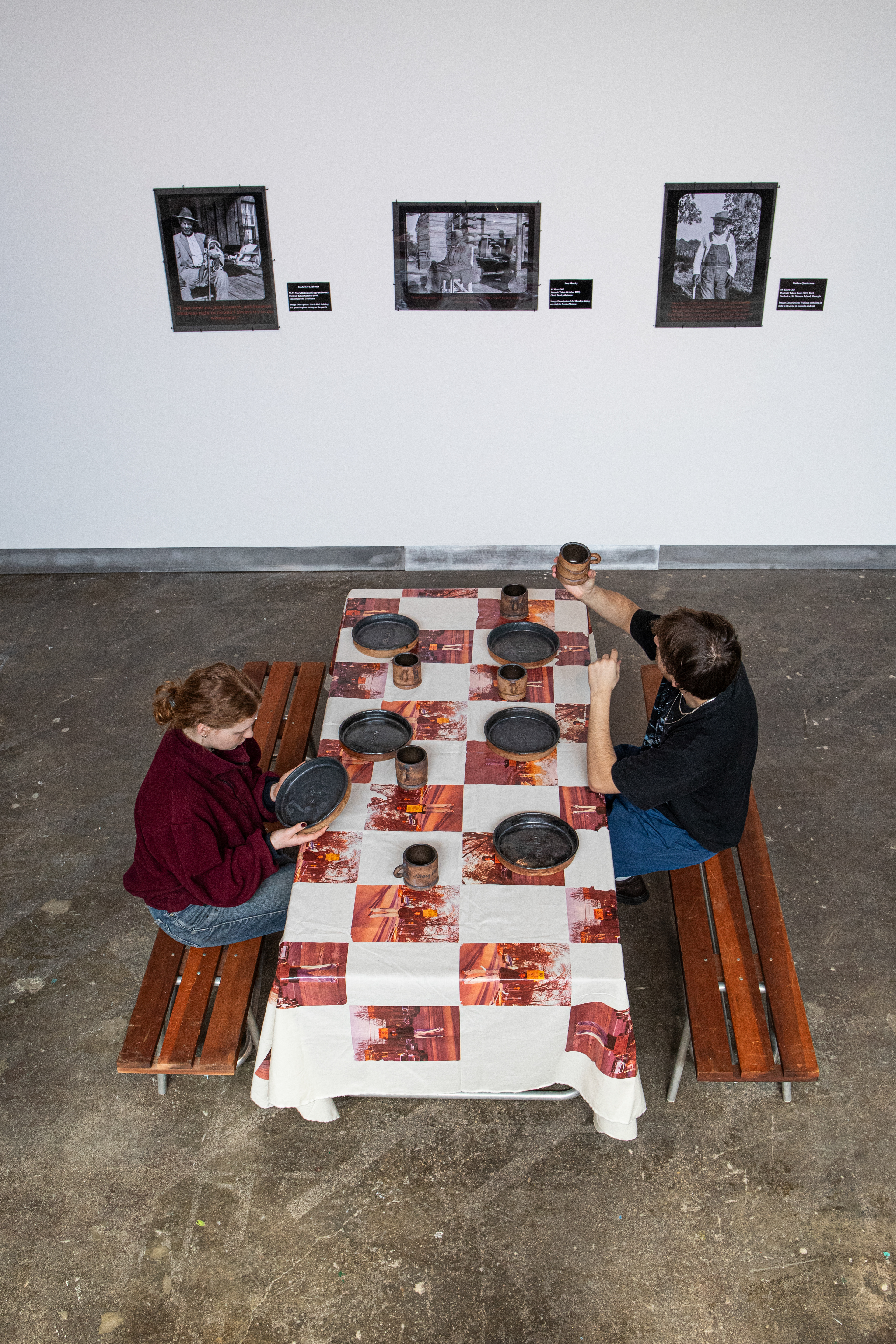
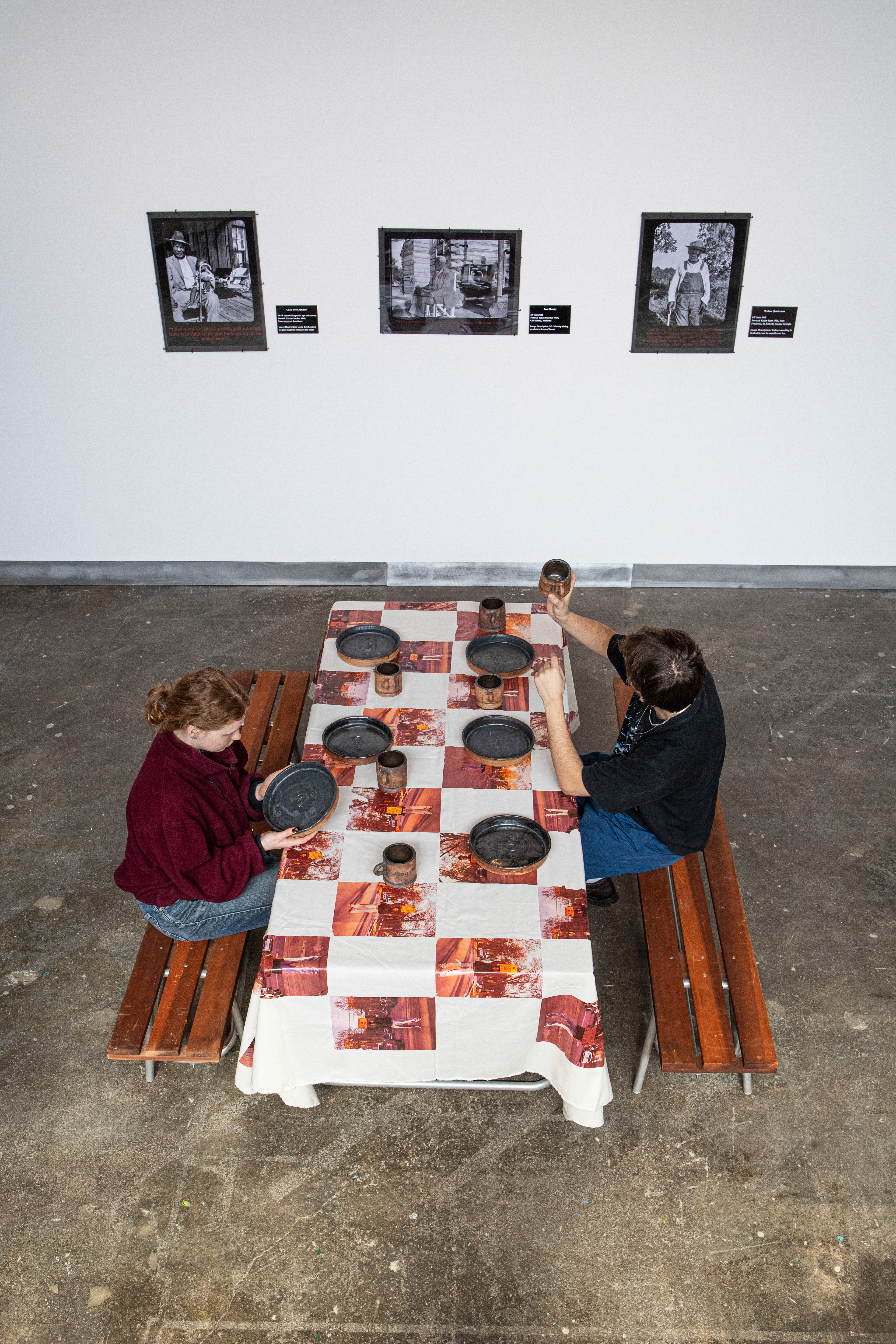
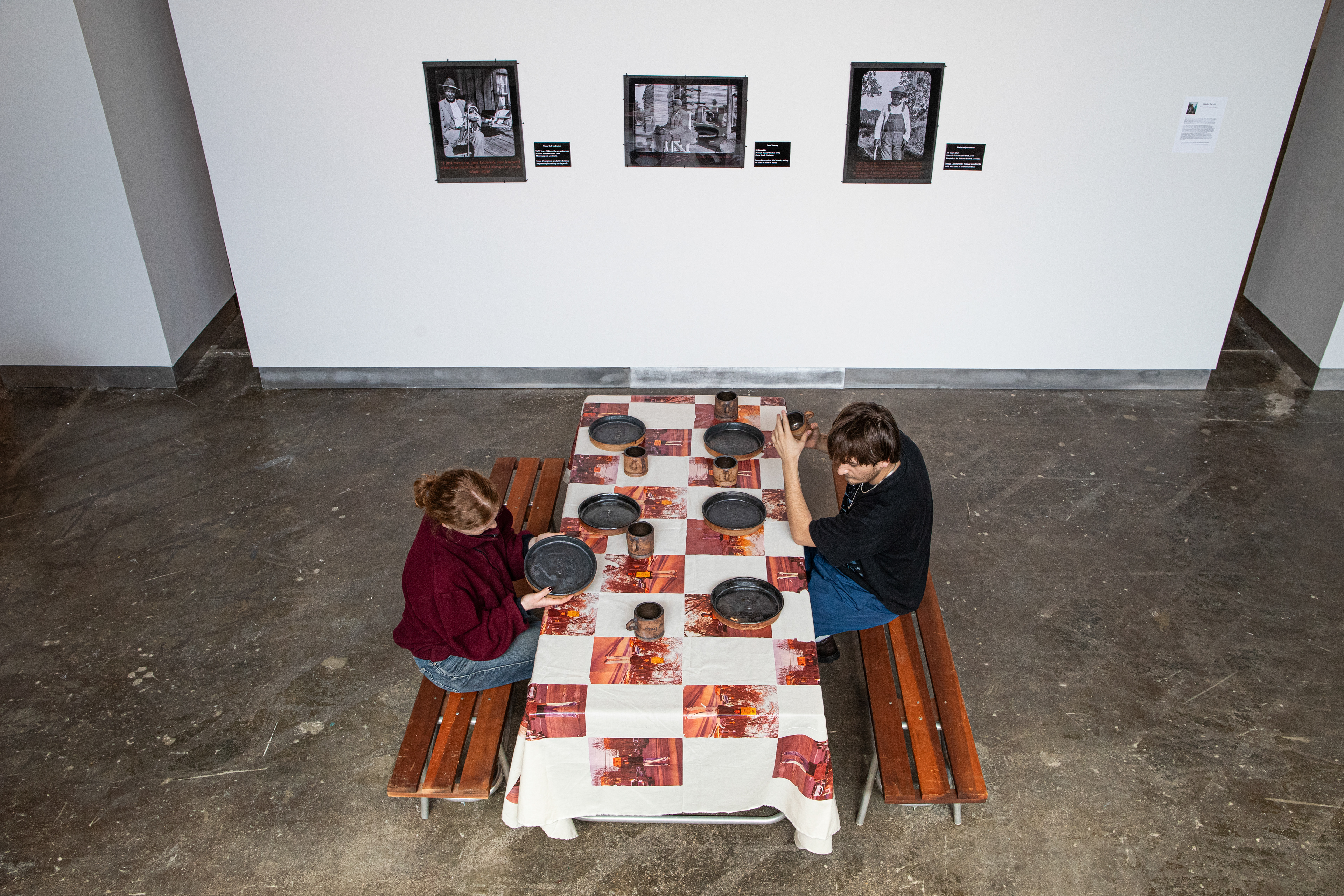
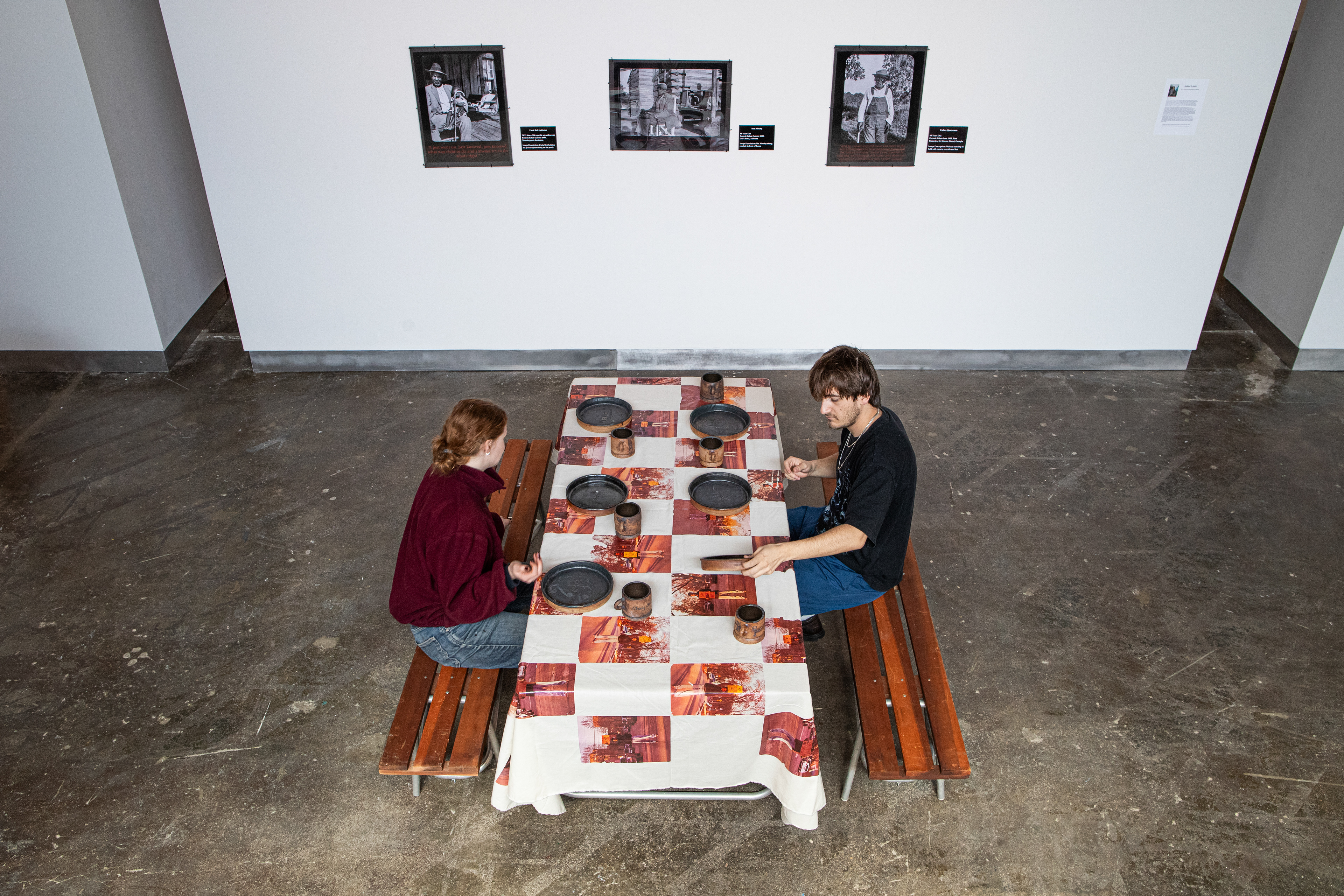
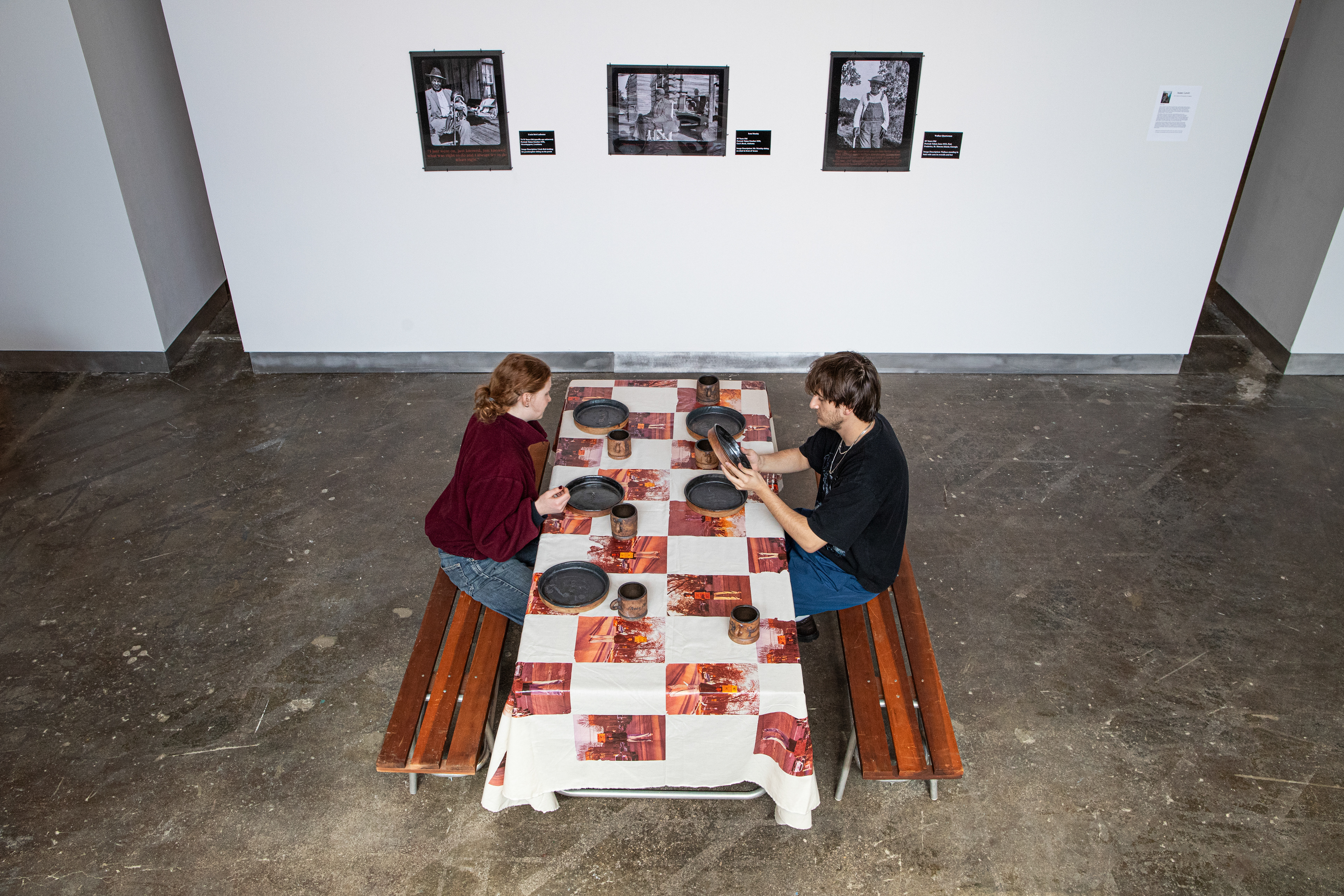
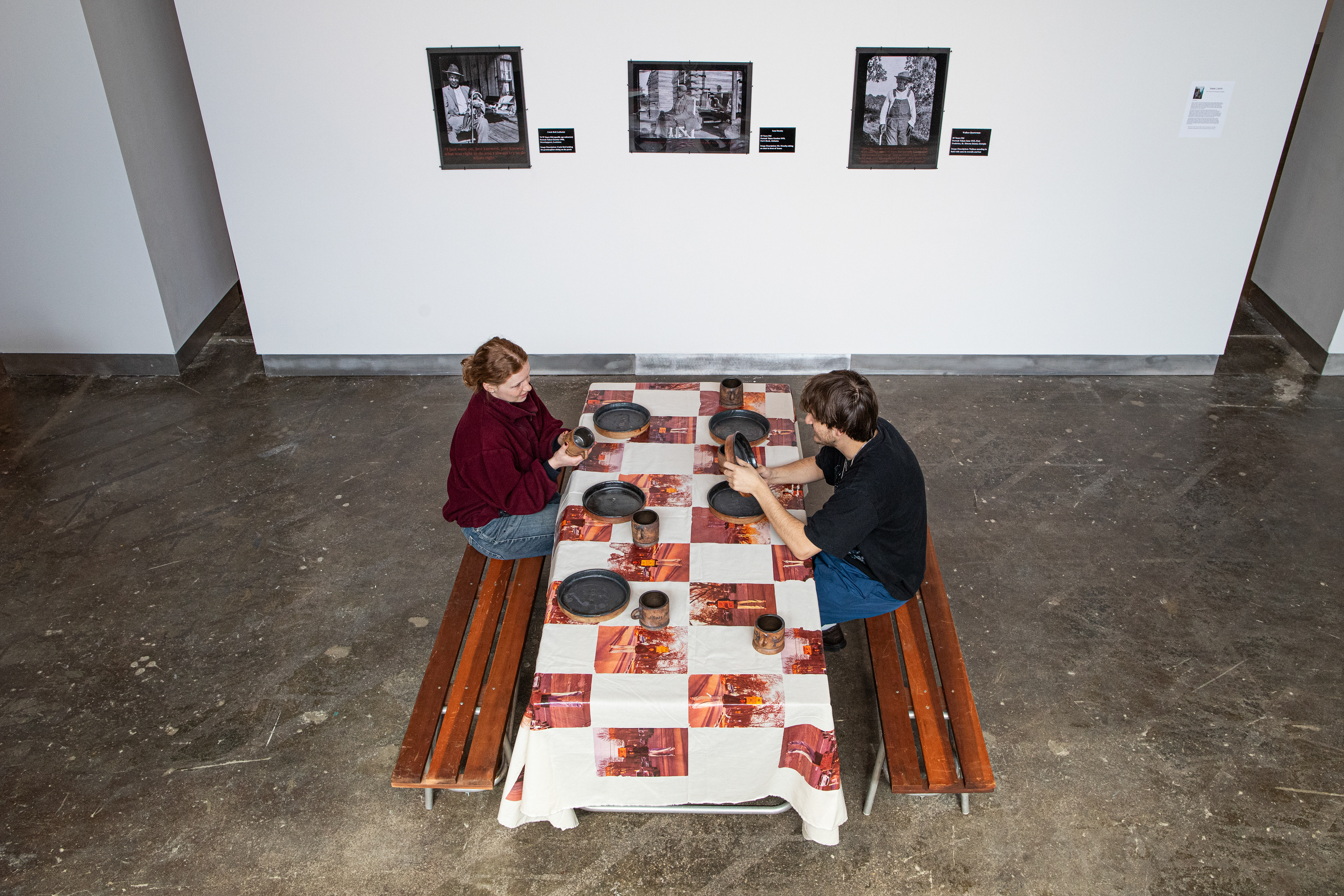
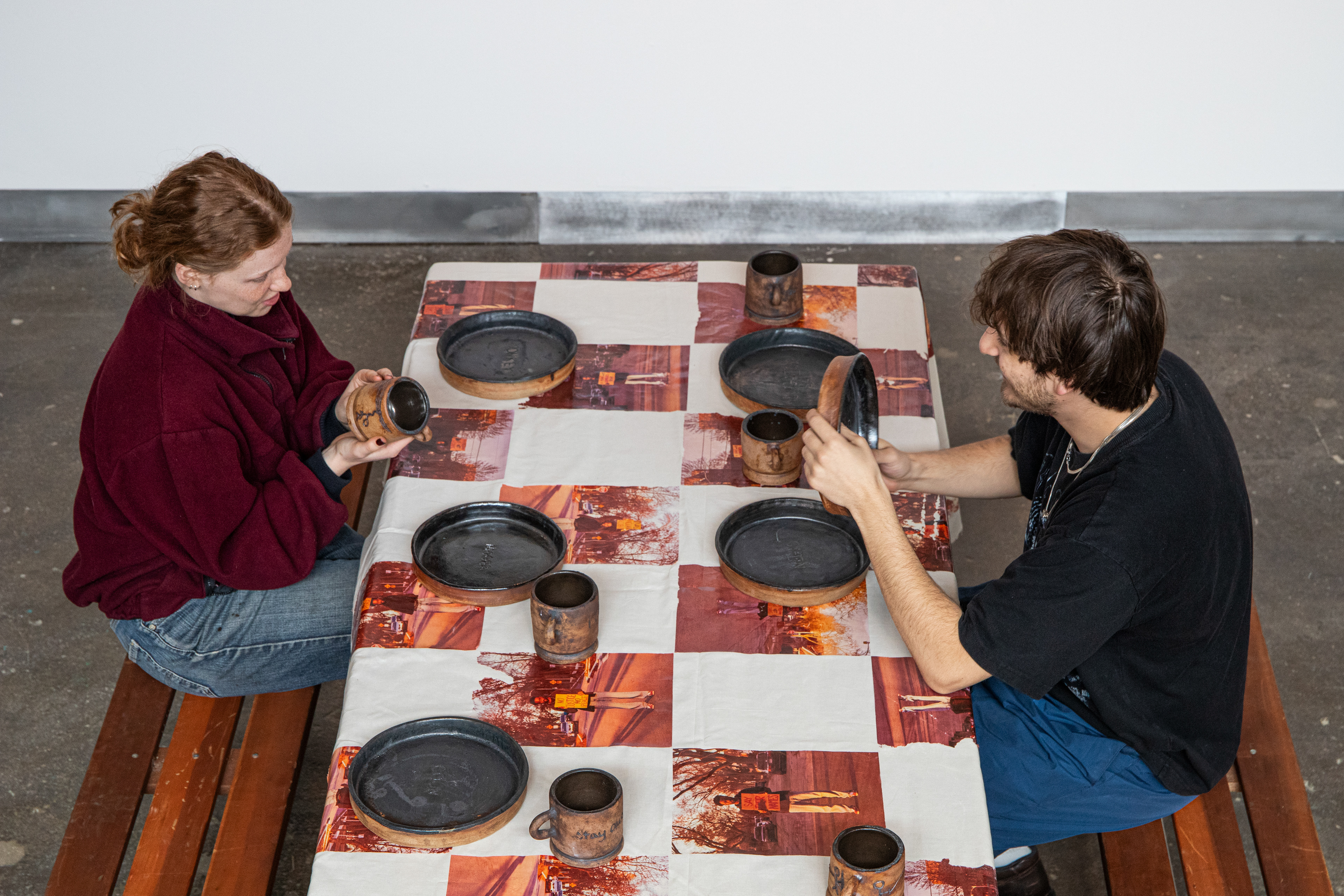
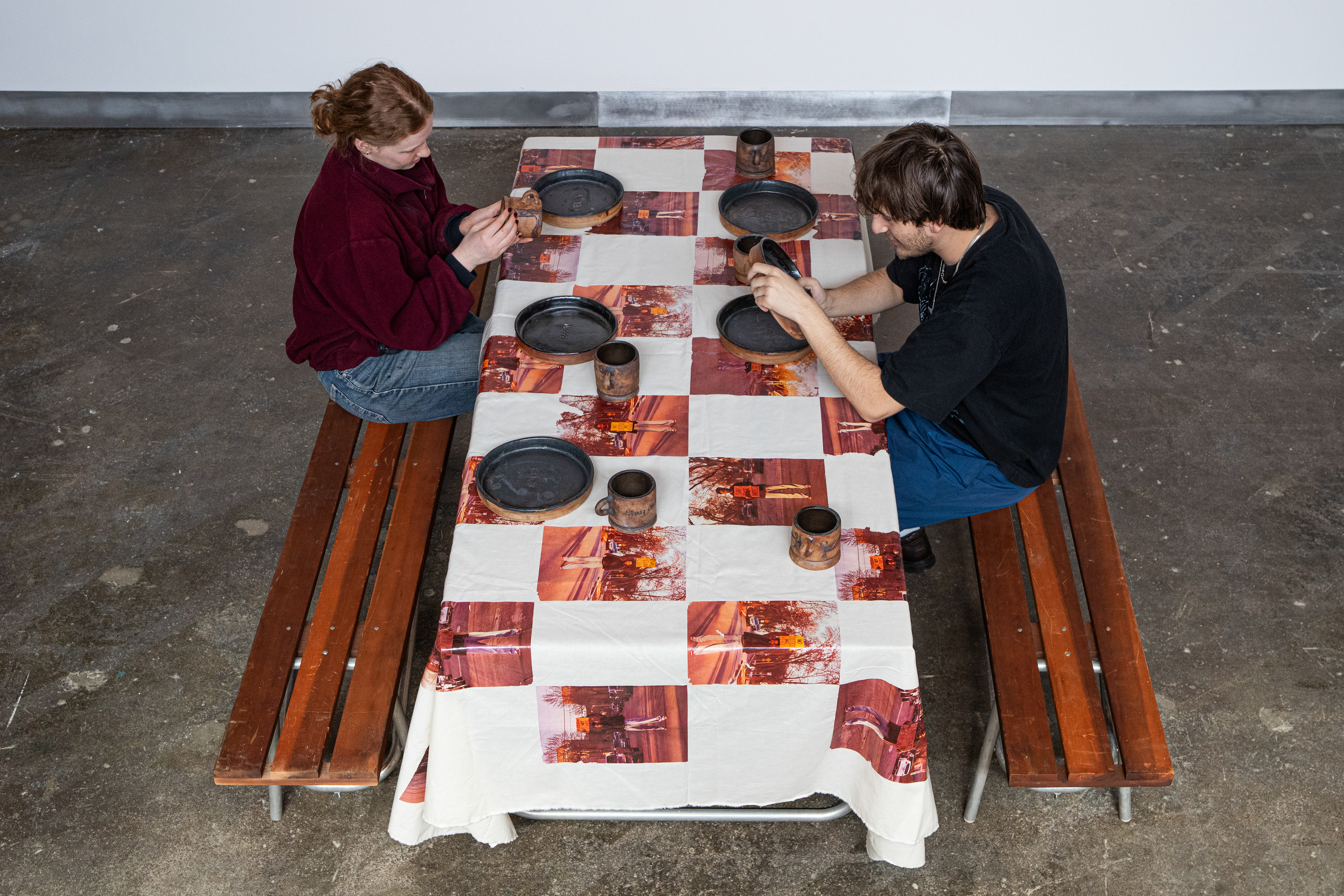
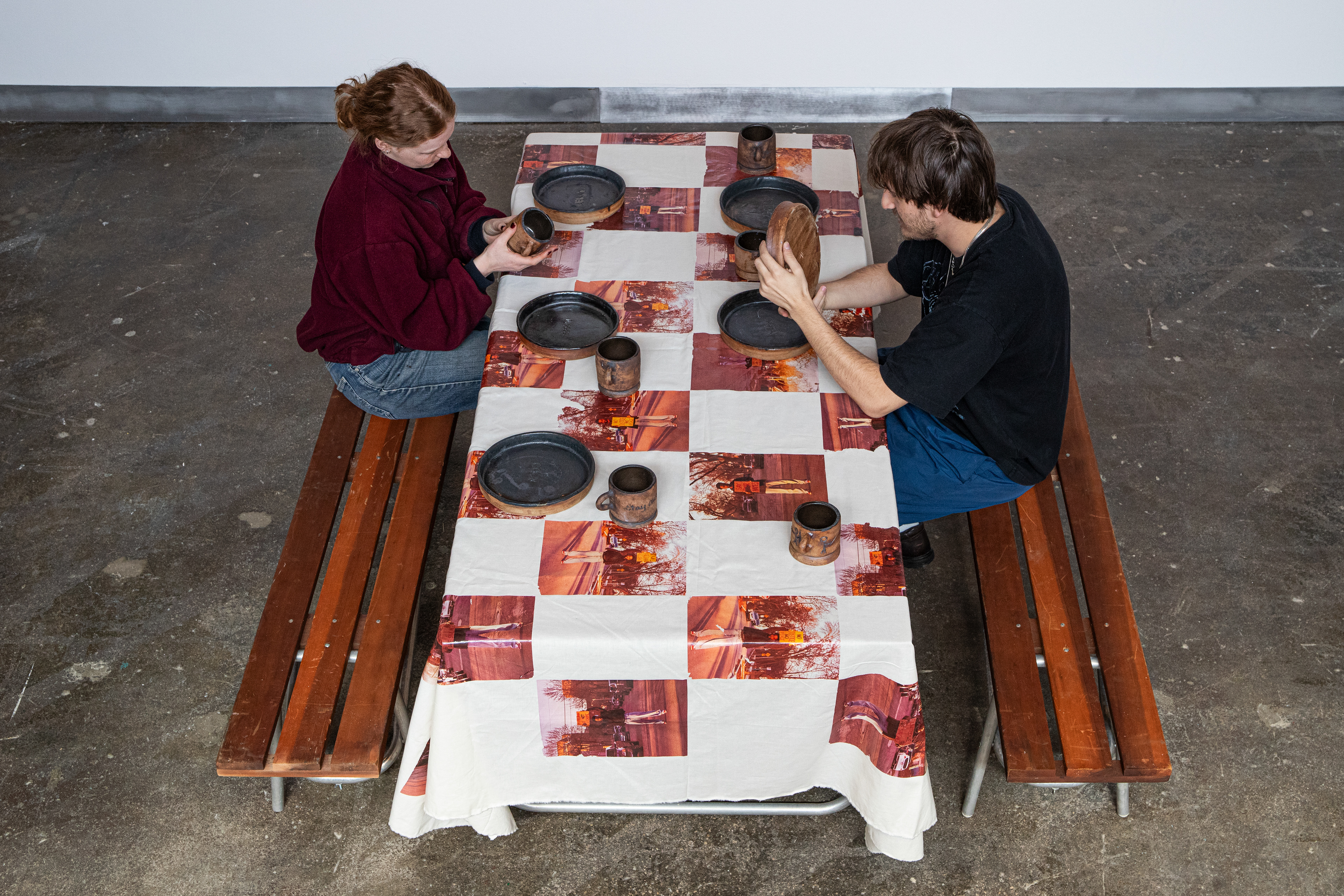
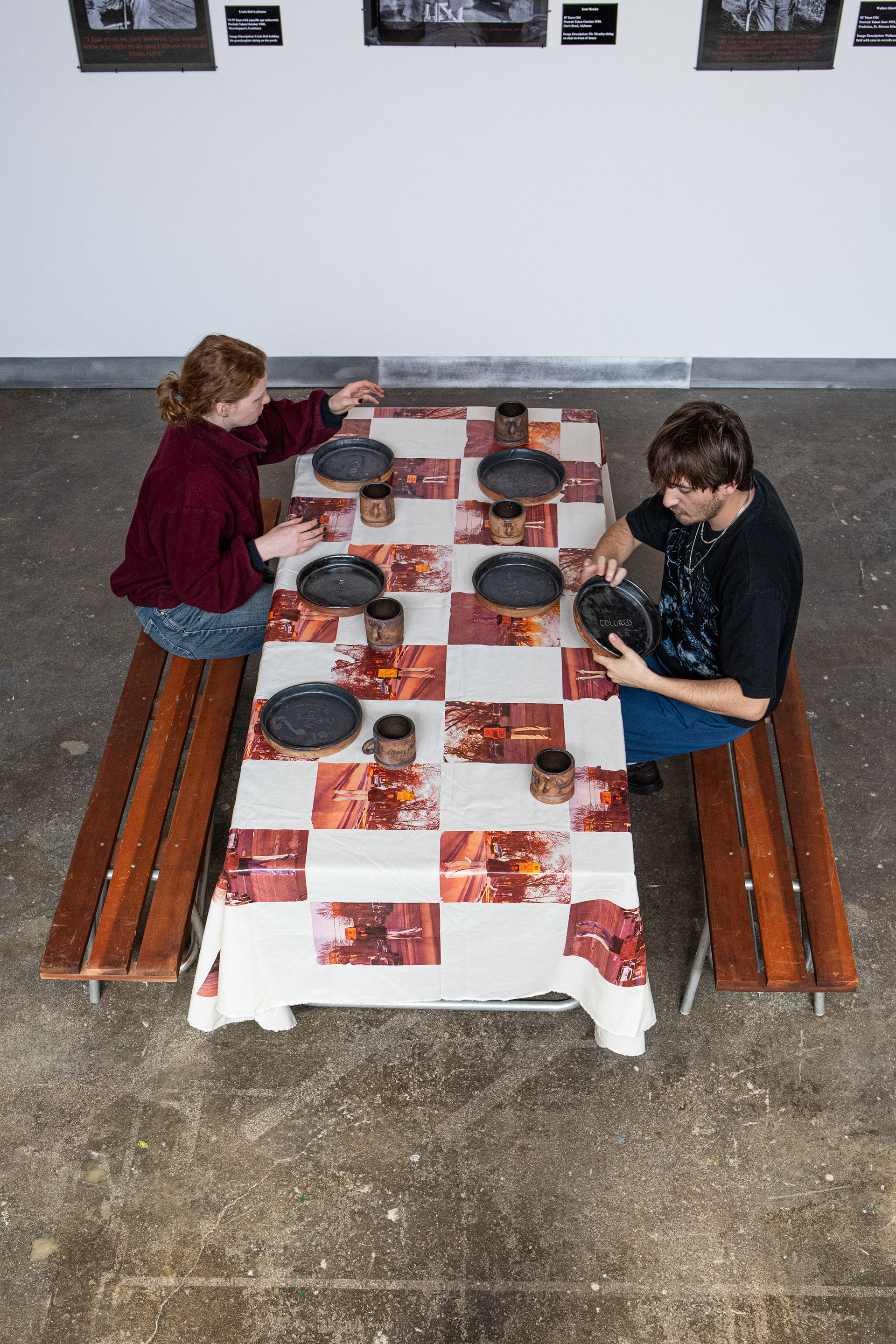
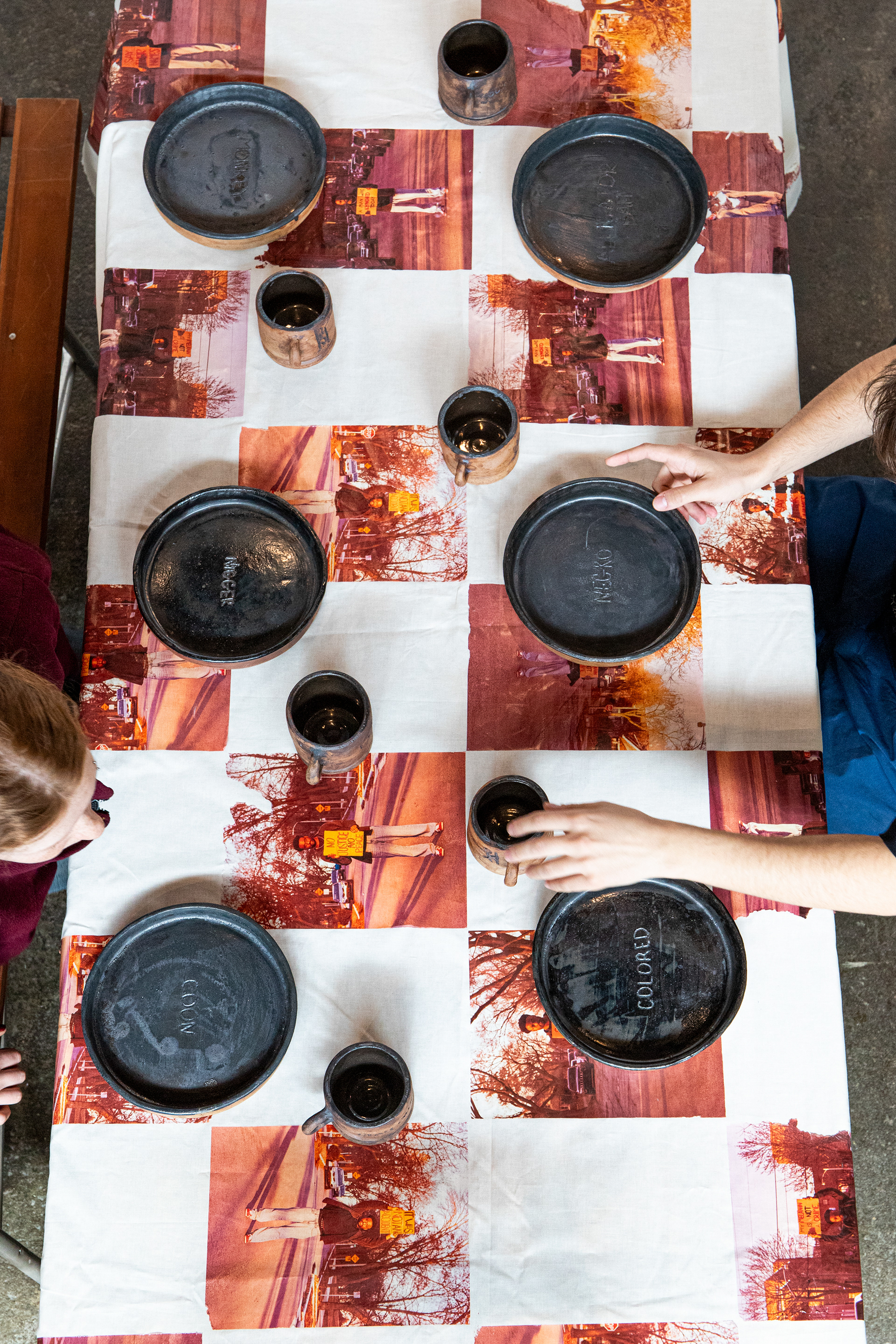
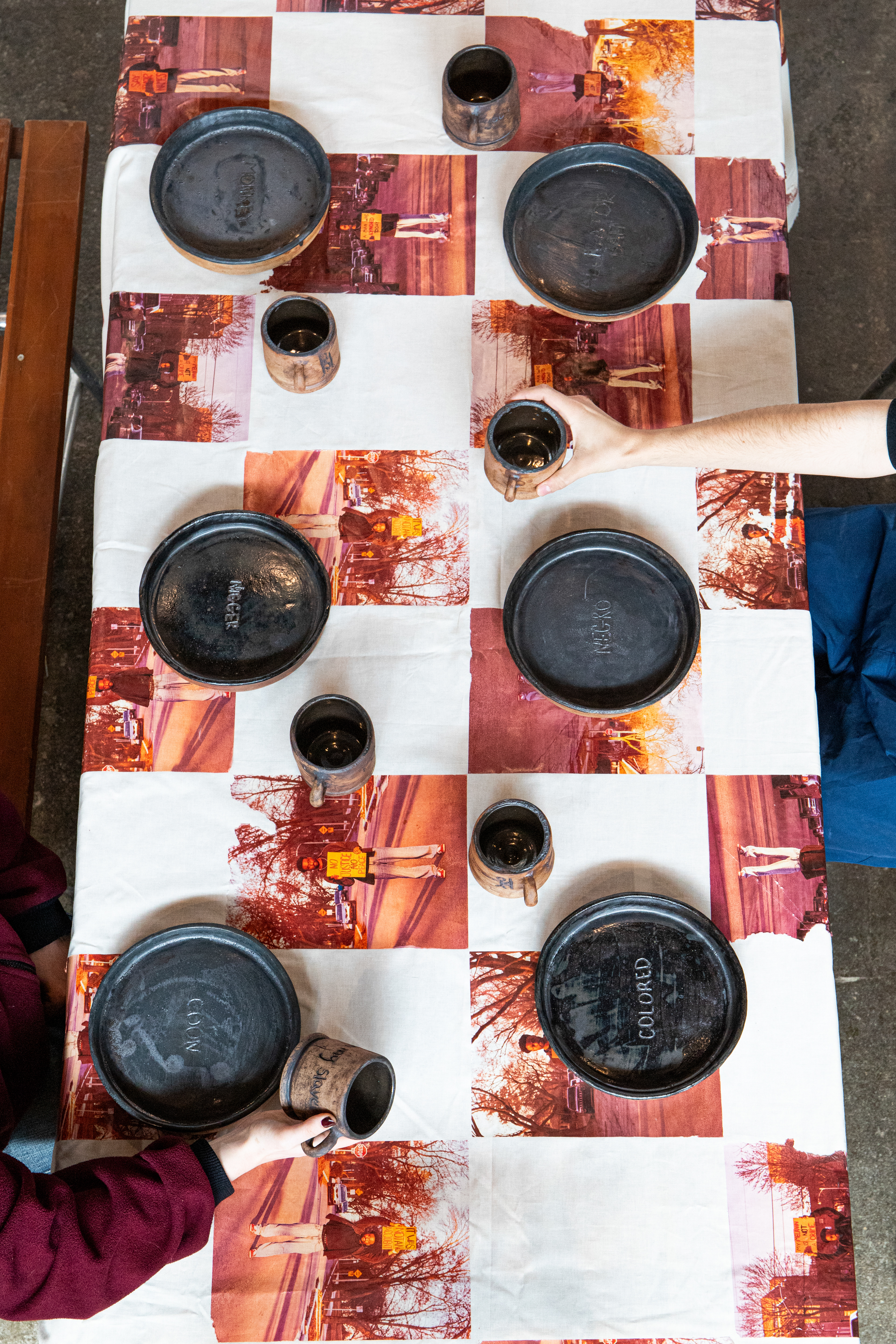
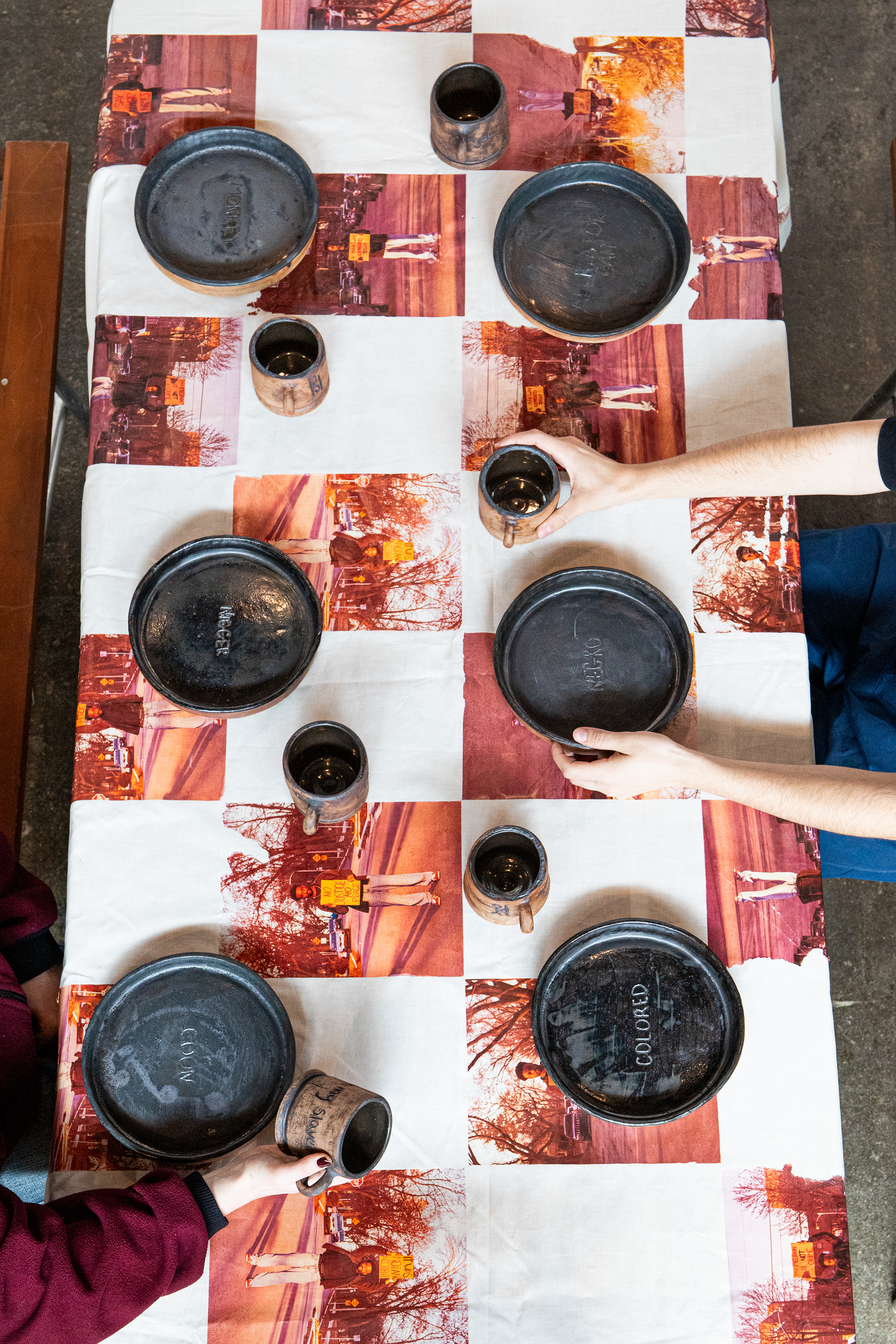
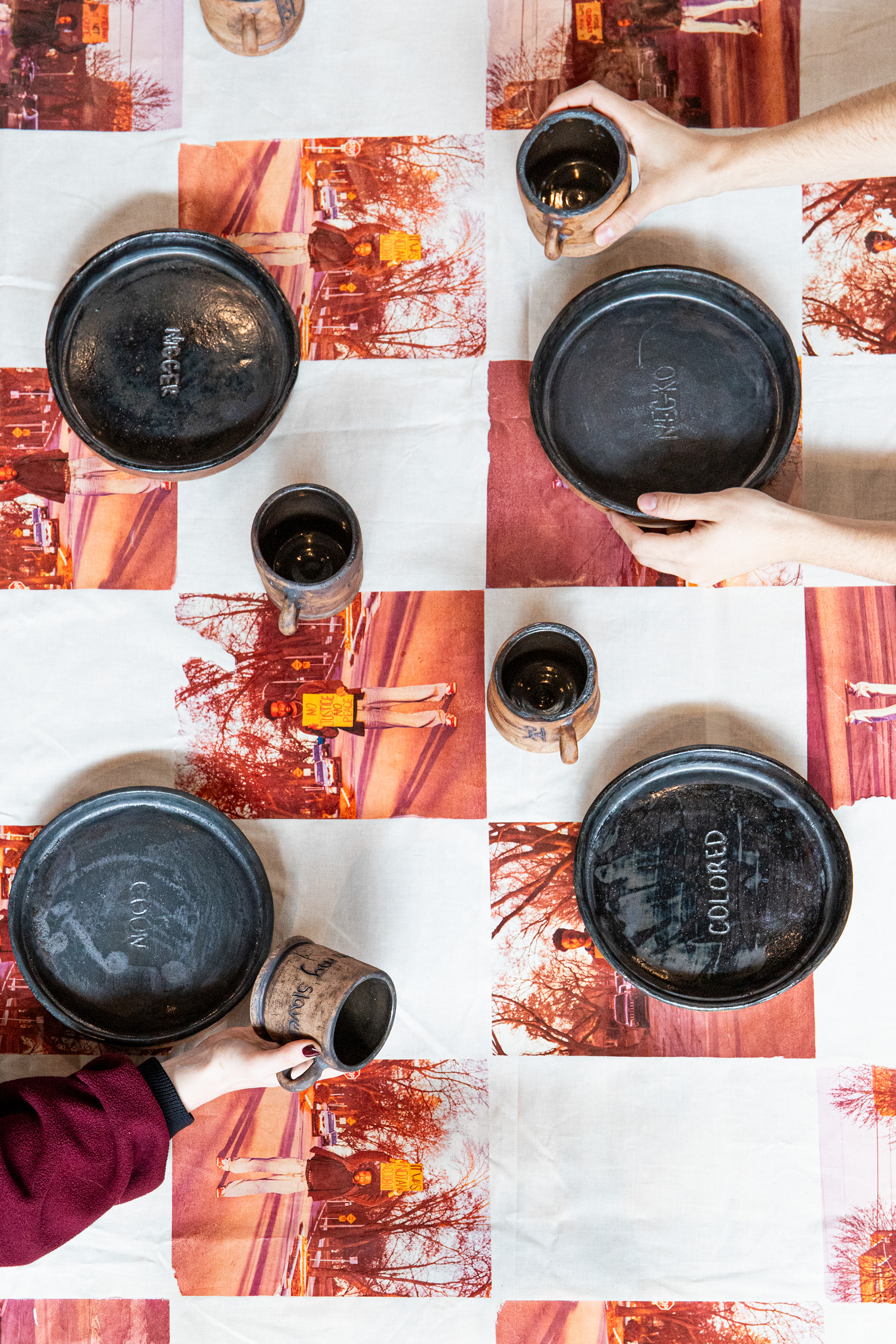
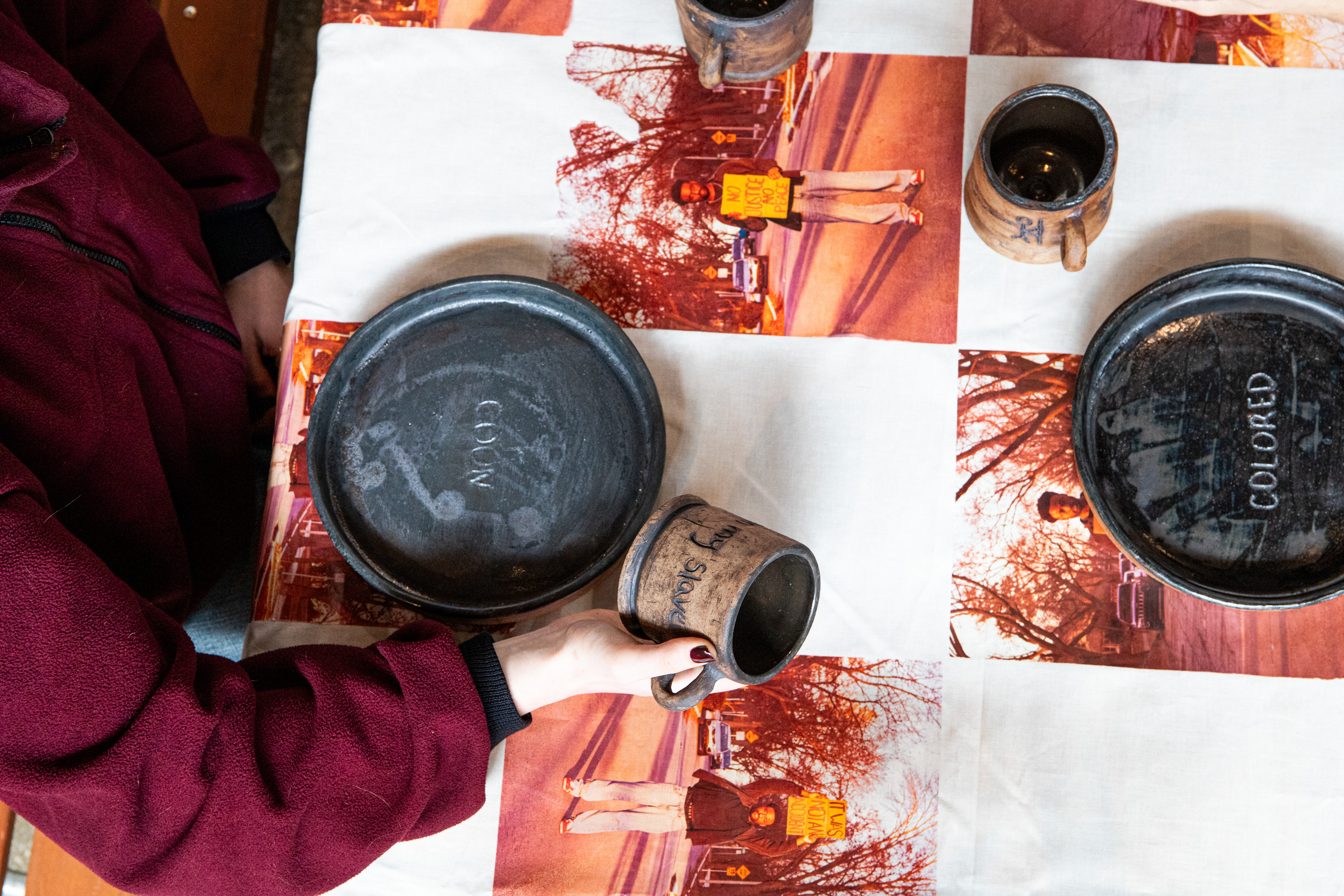
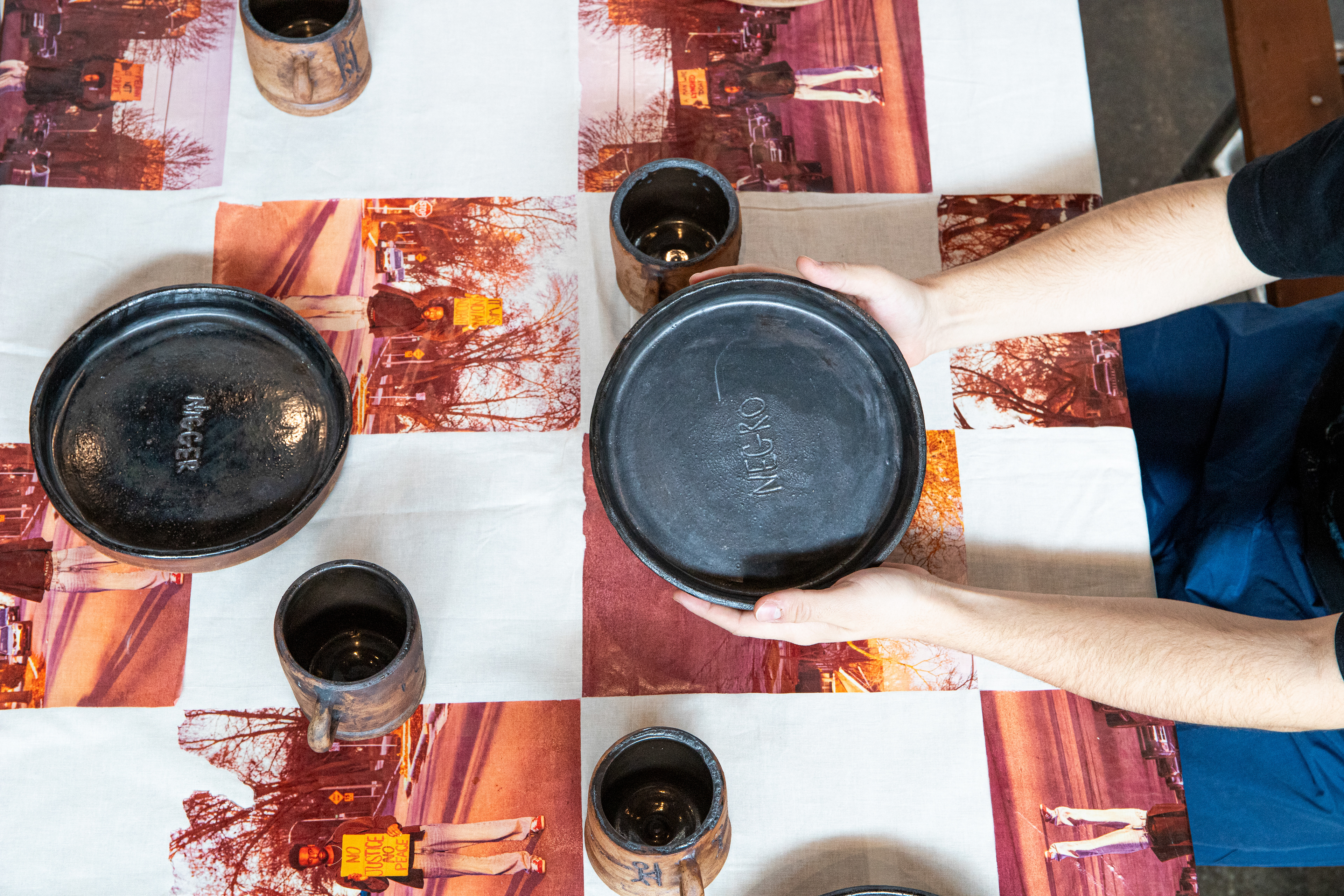
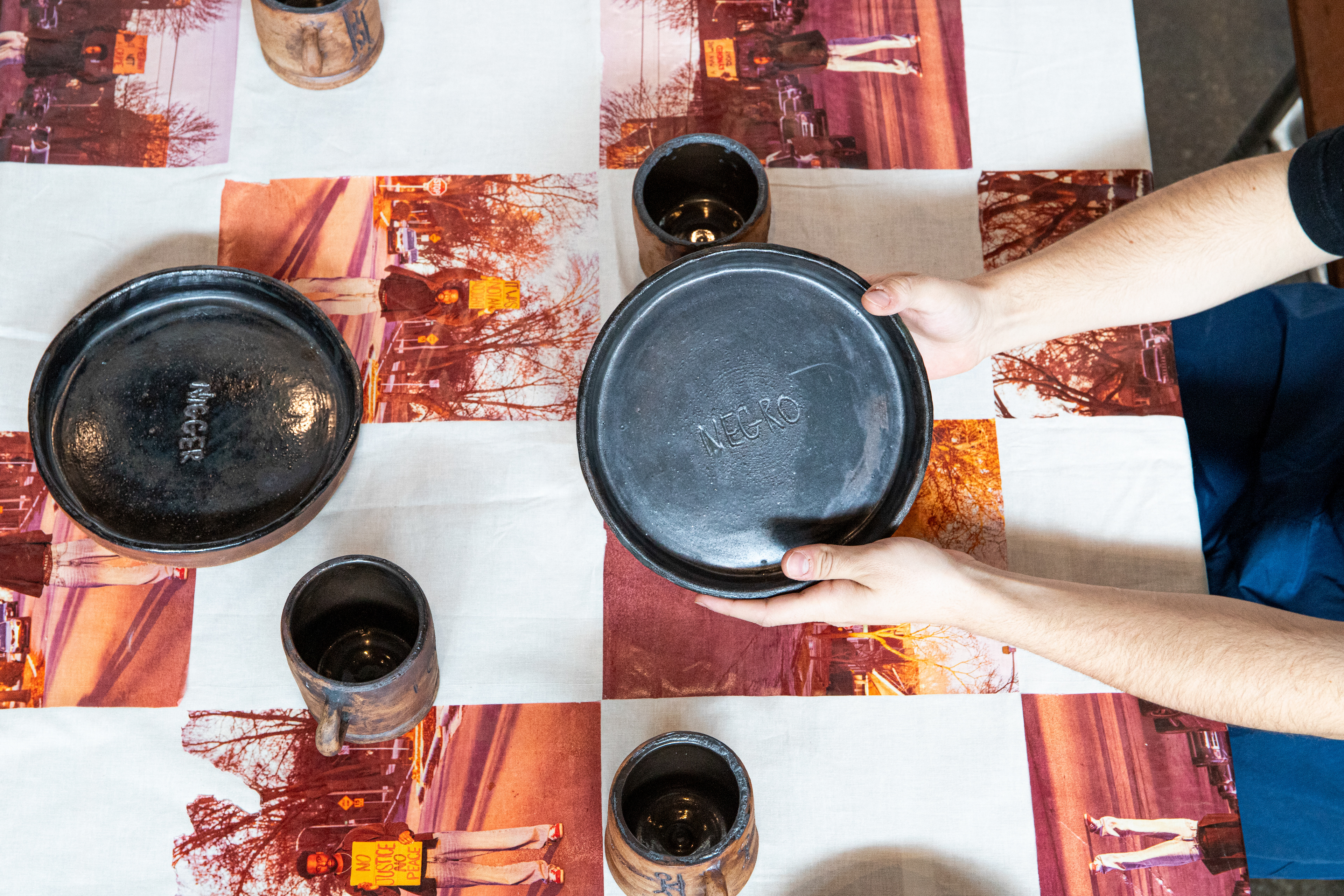
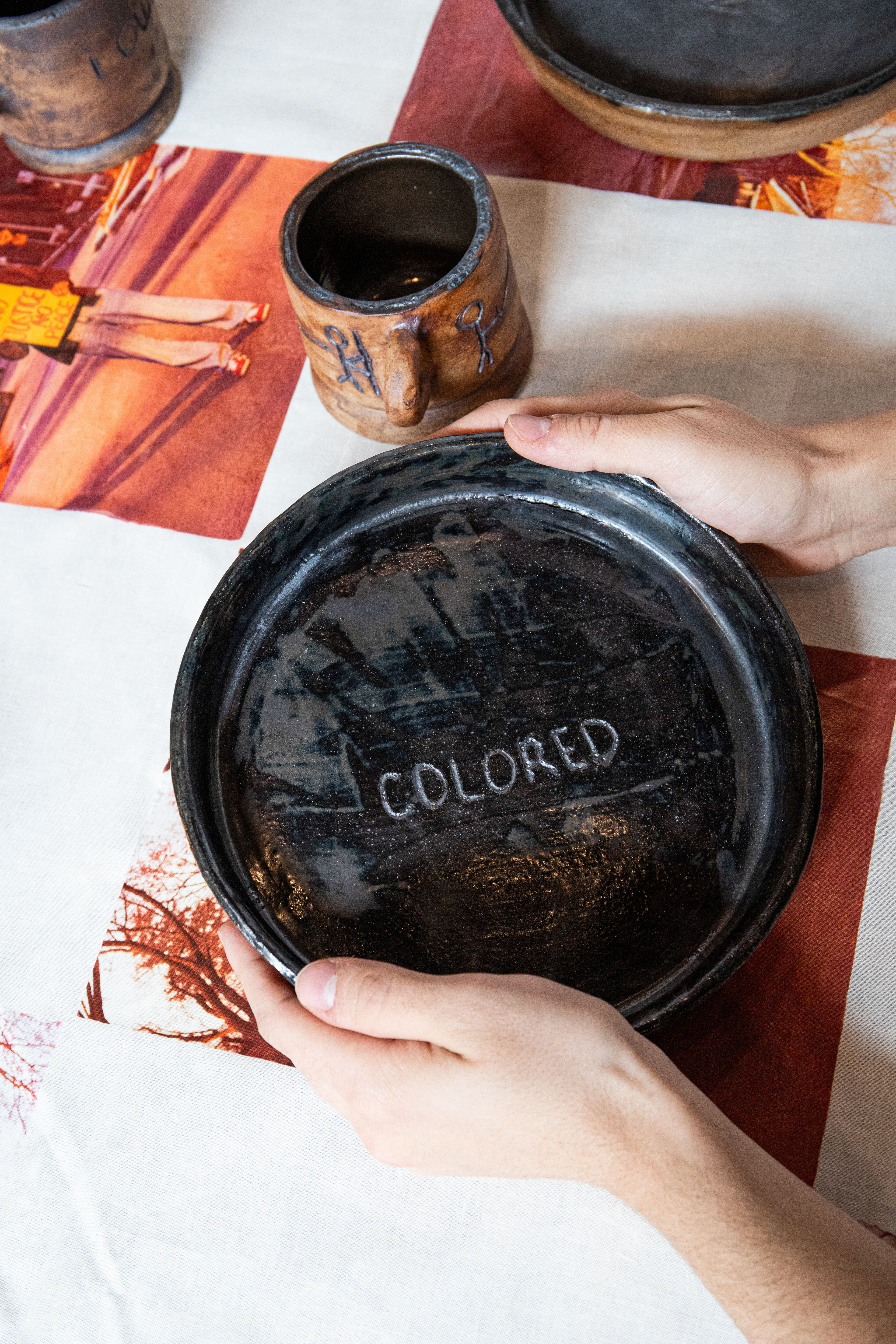
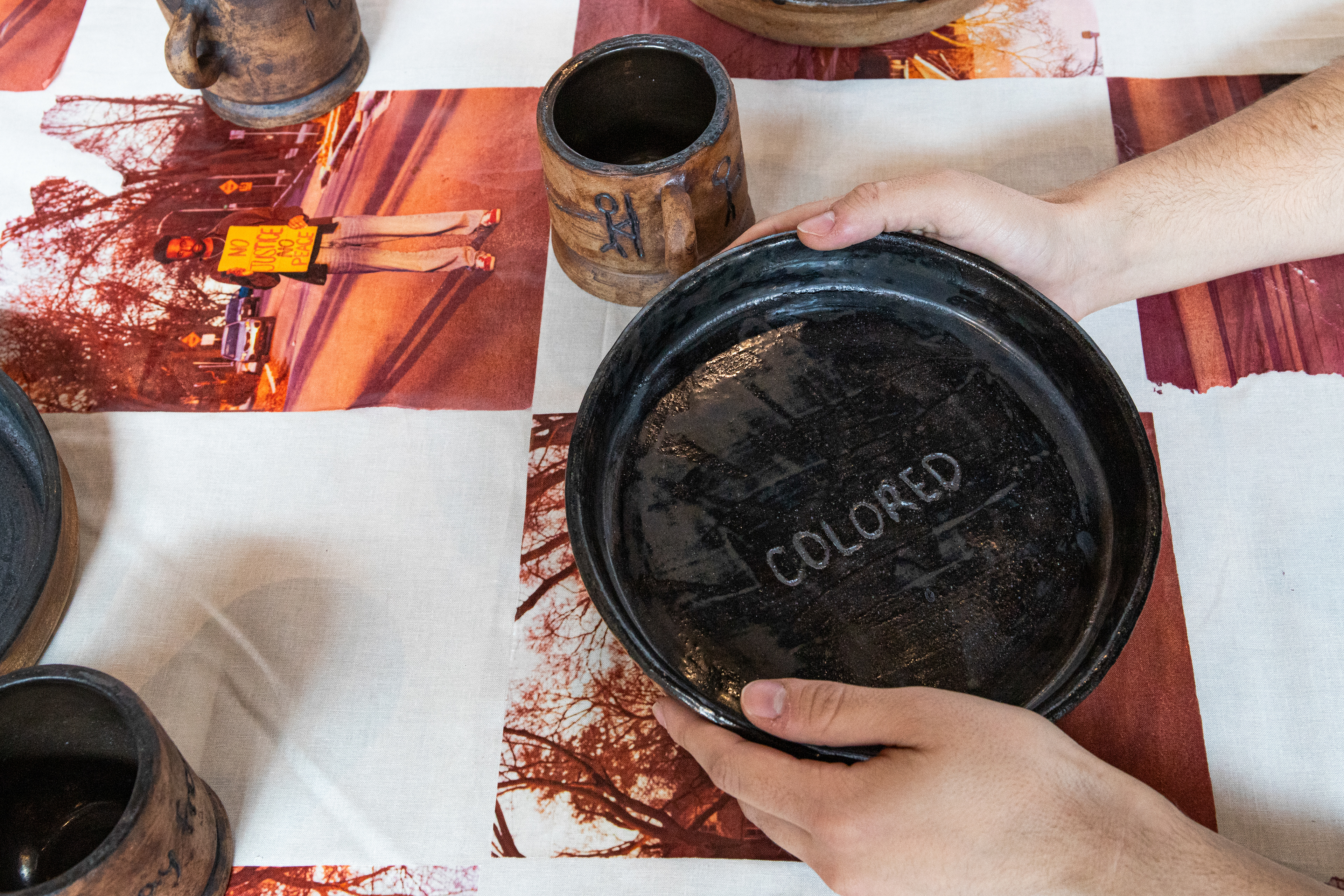
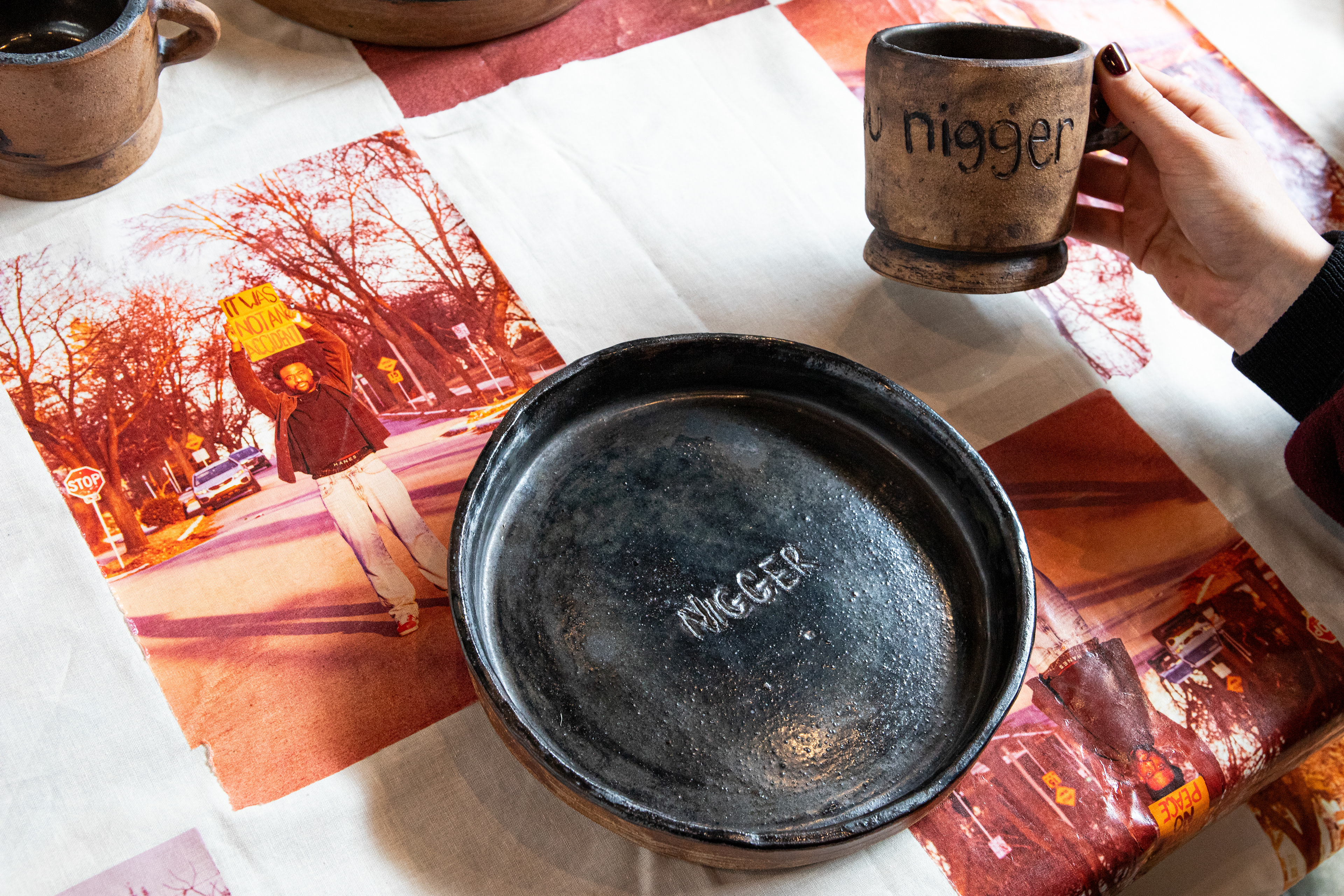
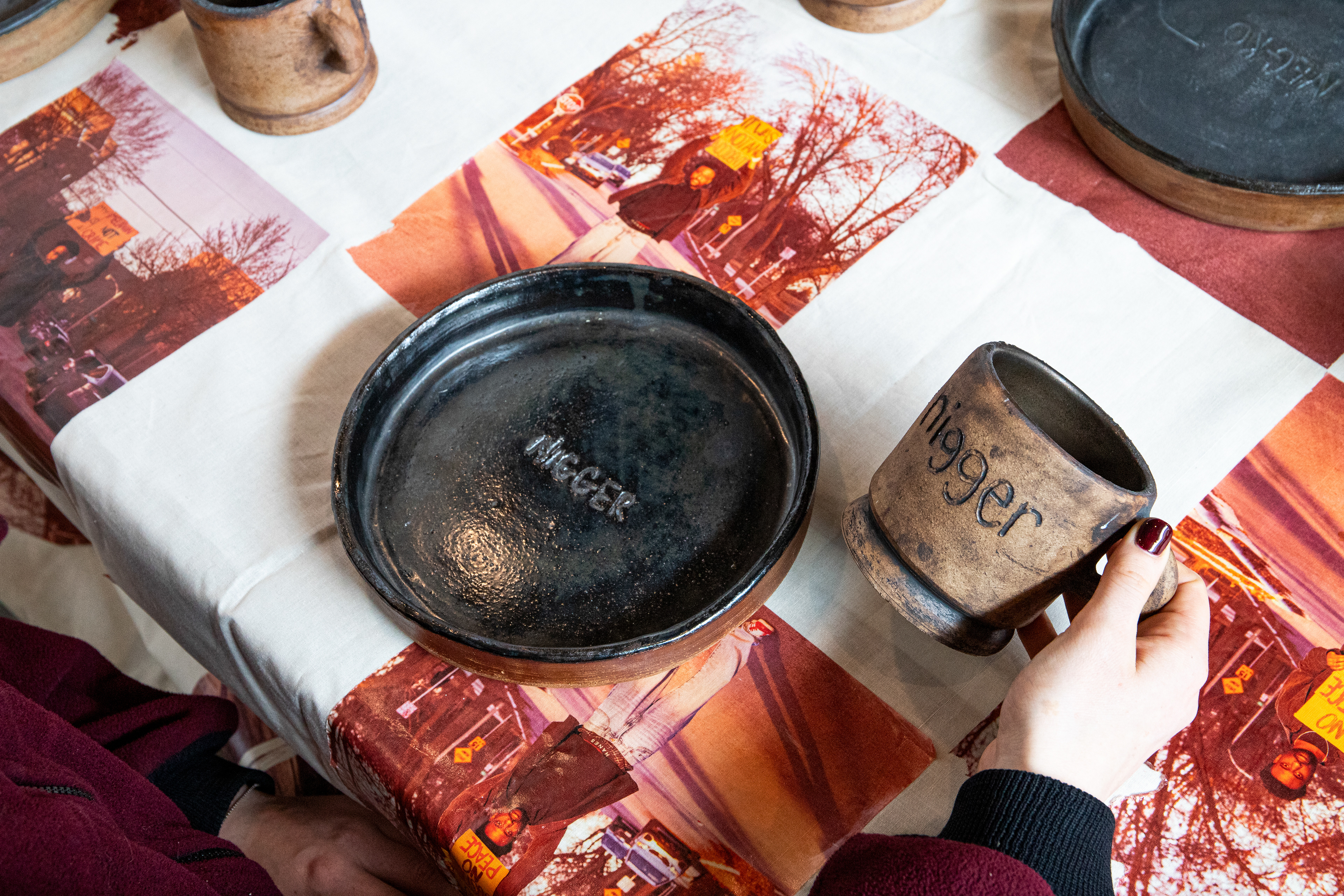
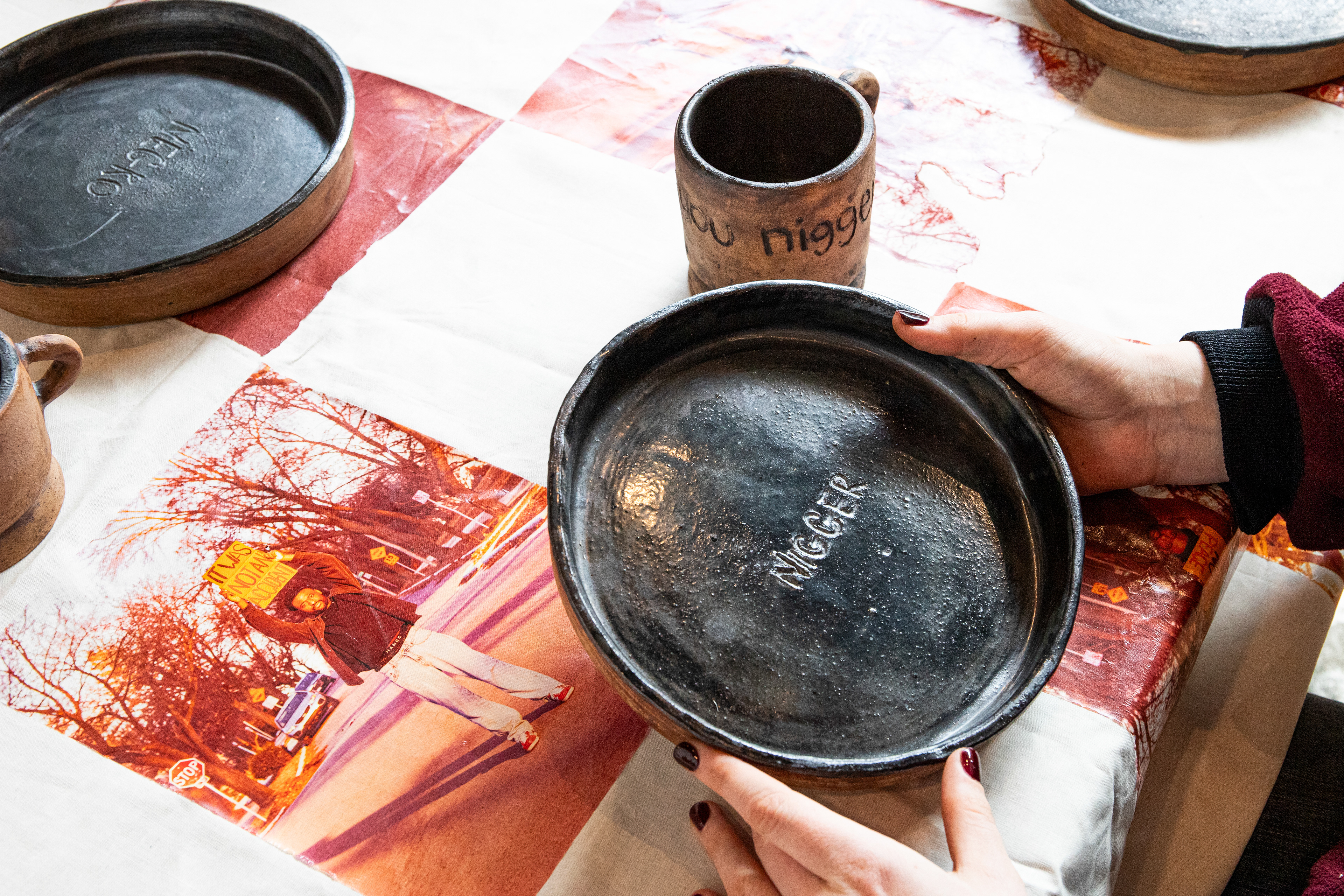
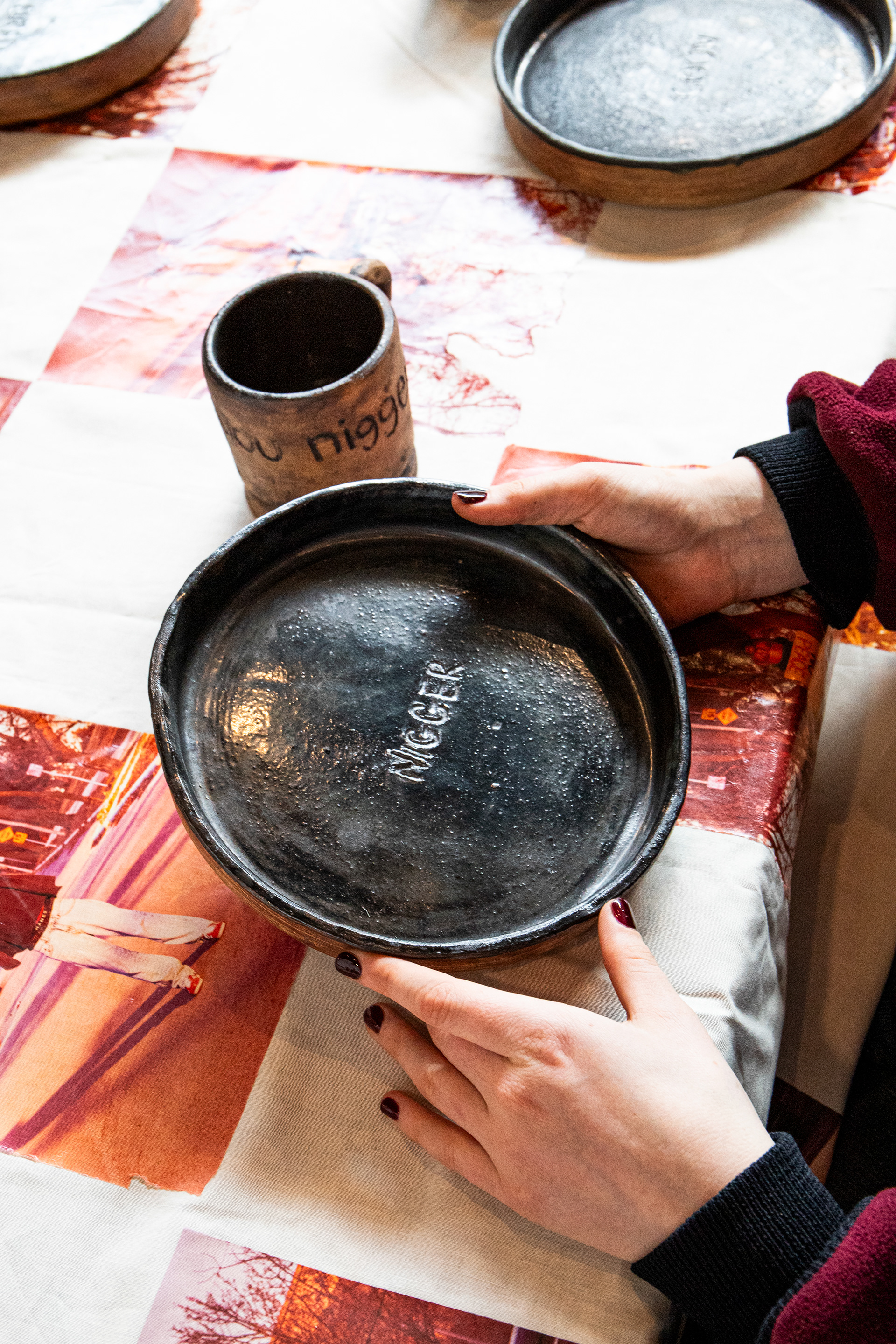
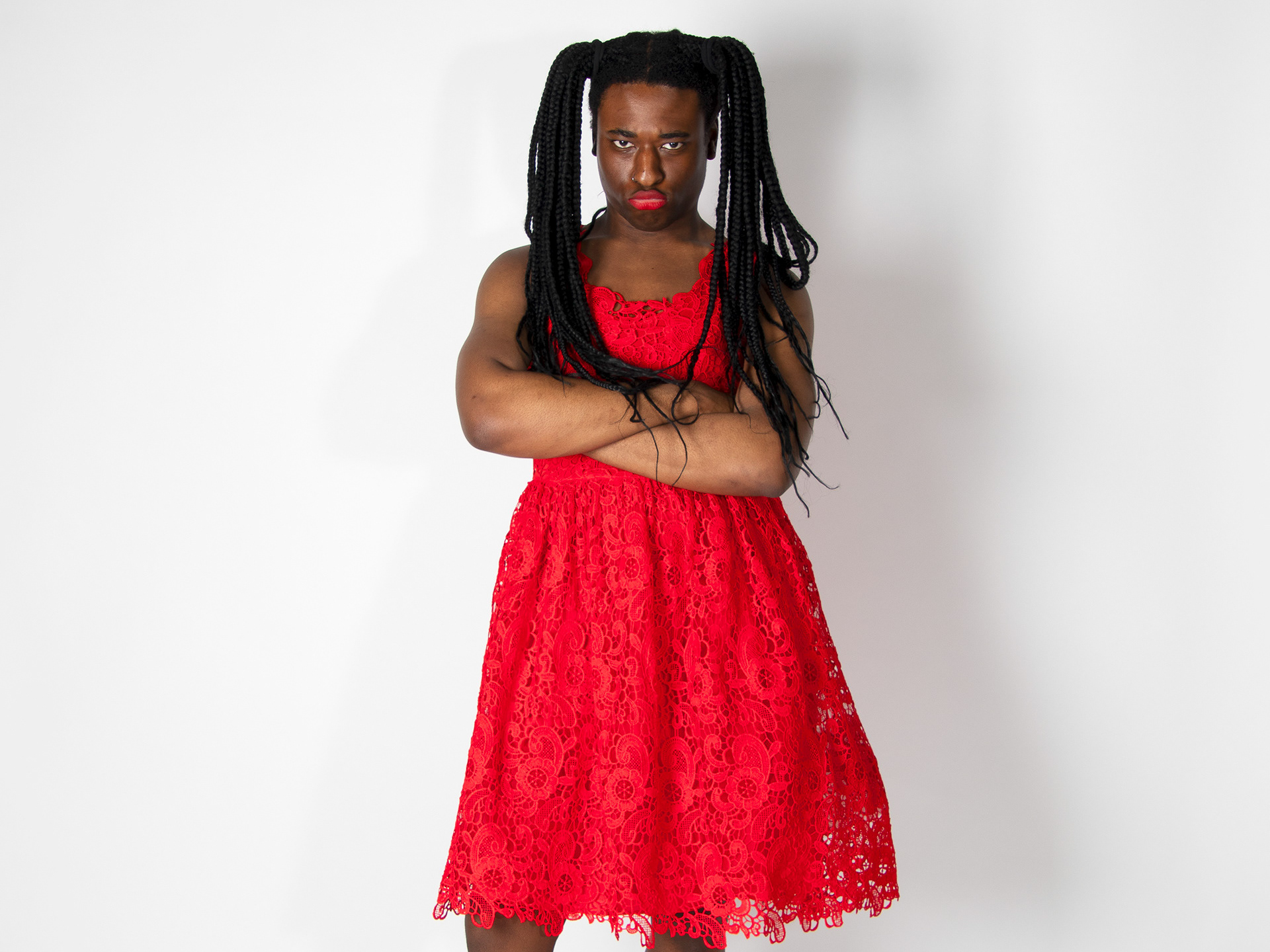
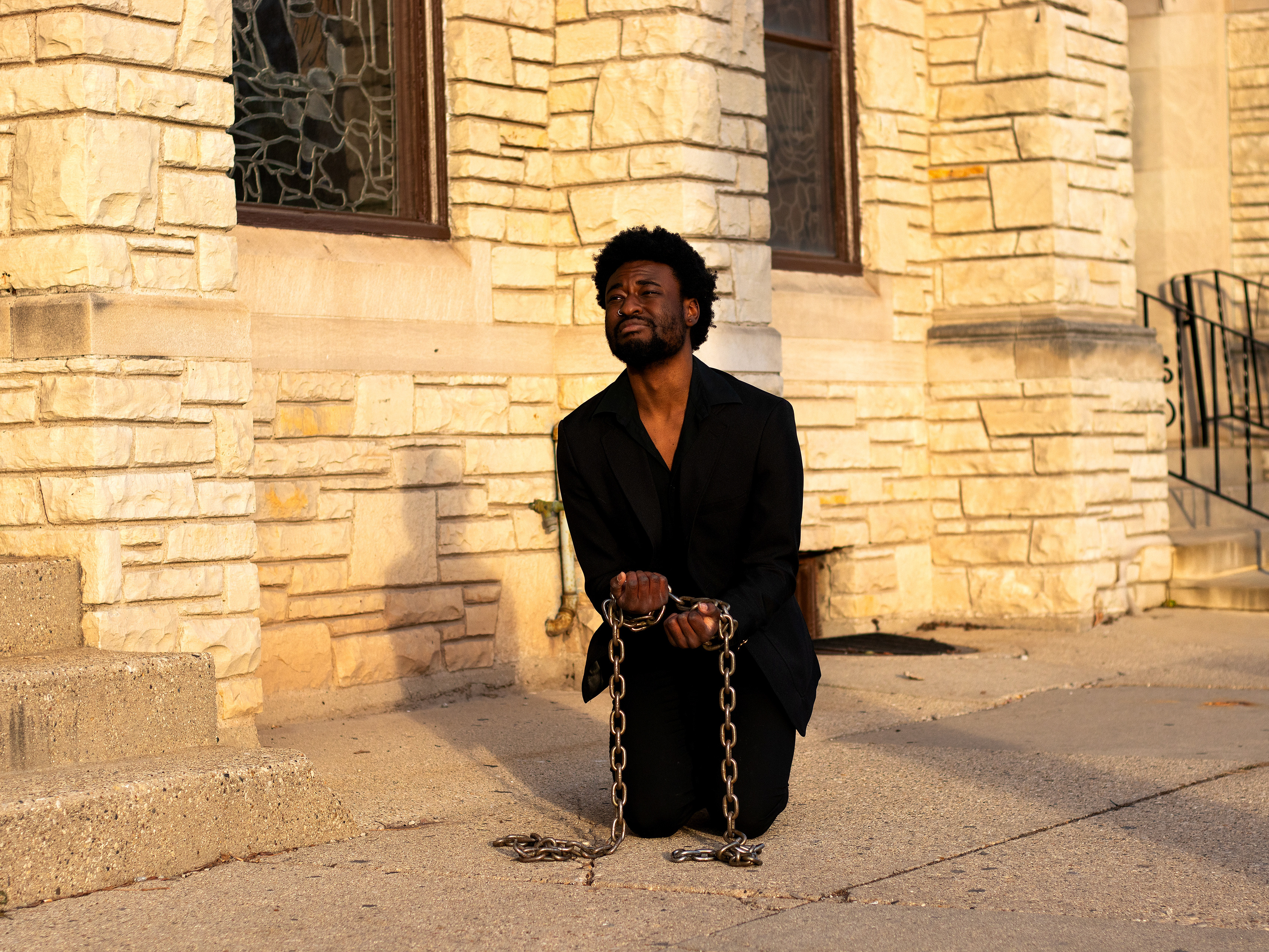
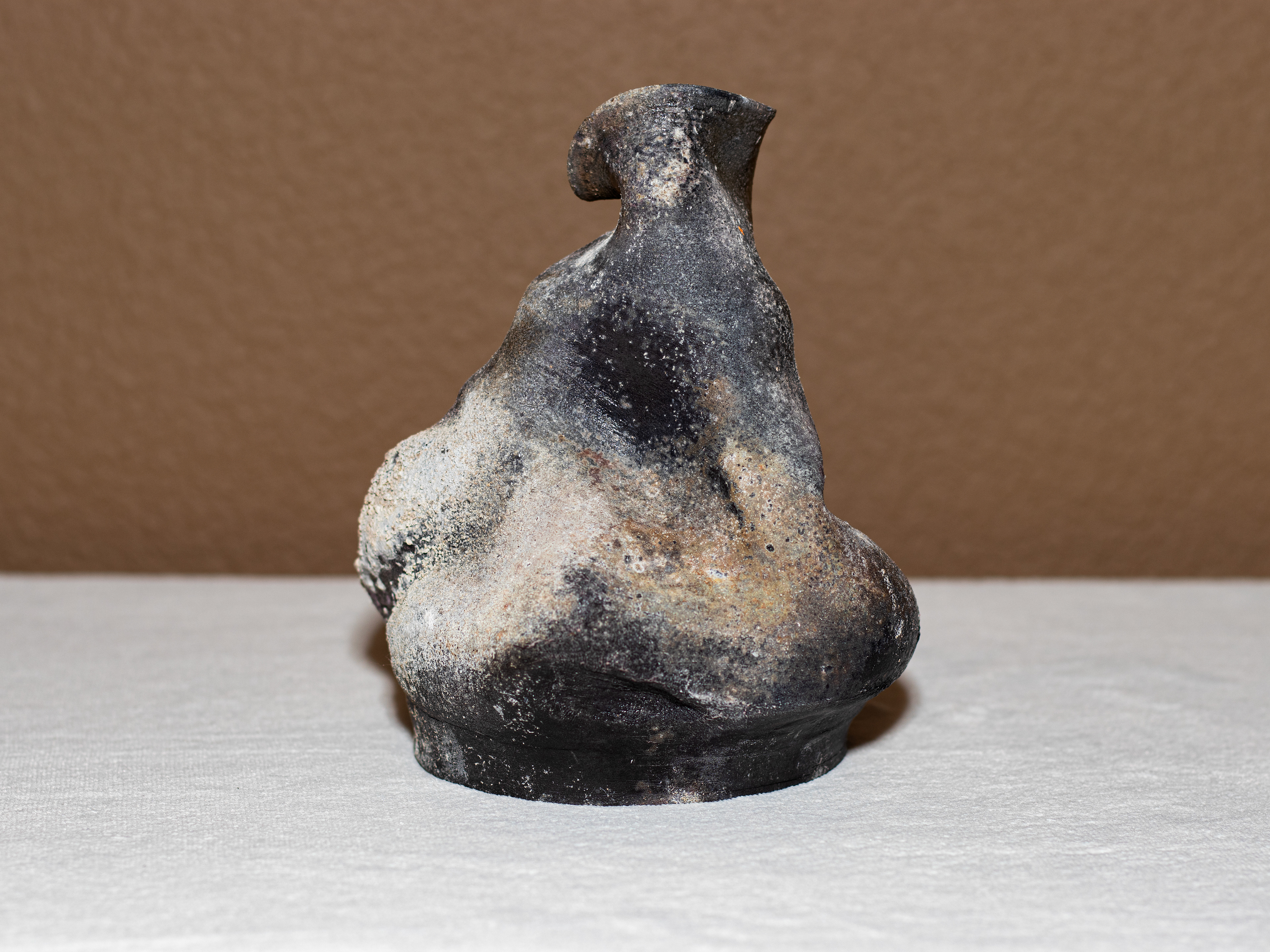
Pick A Nig is a body of work showcasing a representational ceramic picnic accompanied by typographic frames and images with quotations from interviews of former slaves. Engravings on wheel-thrown plates and mugs include hand-drawn imagery of racial violence against Black people as well as some of the language used to denigrate Black people during the era of plantation slavery. A tablecloth features fabric printed photographs that connect the picnic with the current day, including self-portraits holding Black Lives Matter protest signs. The overall effect shows that violence against Black people is not just a historical reality, but one that continues today.
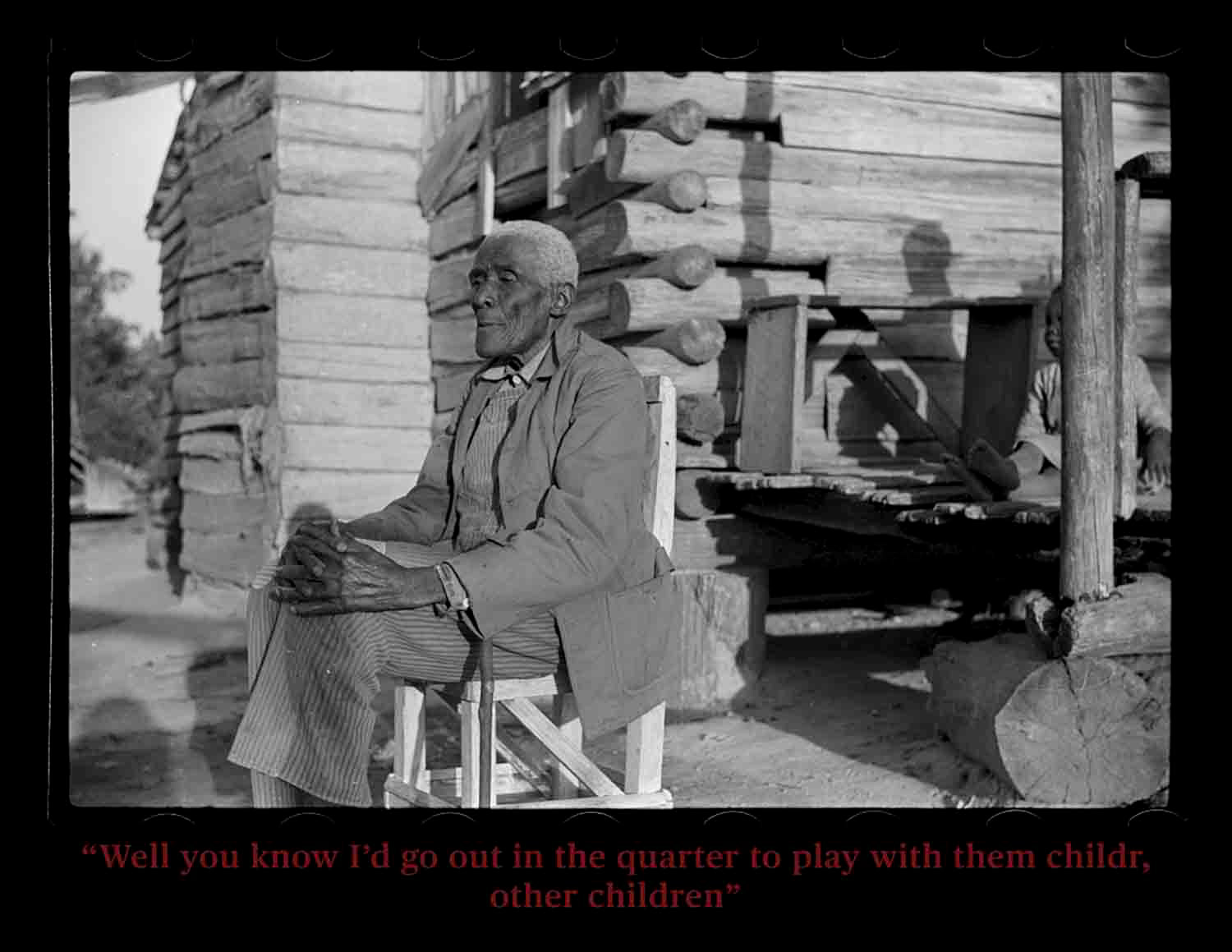
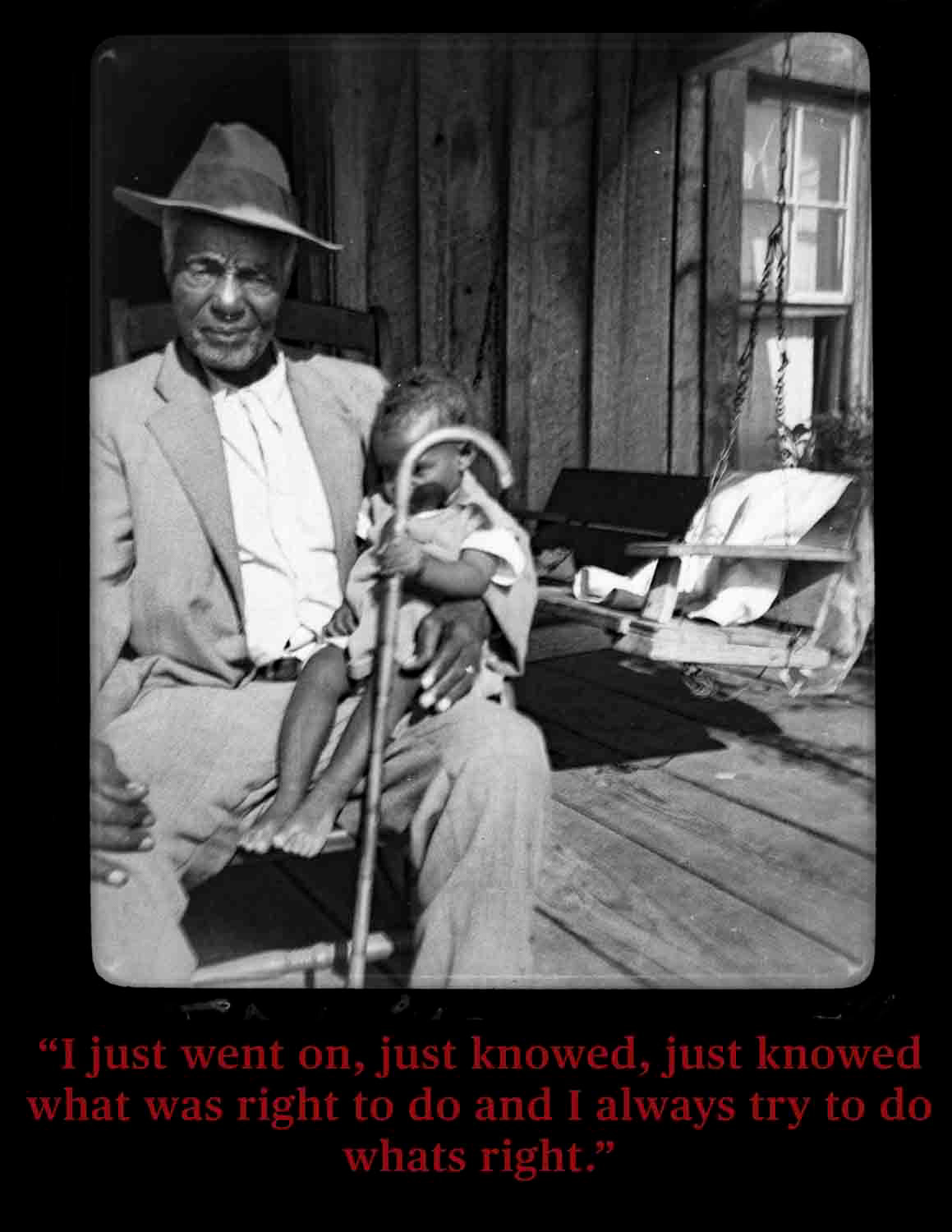
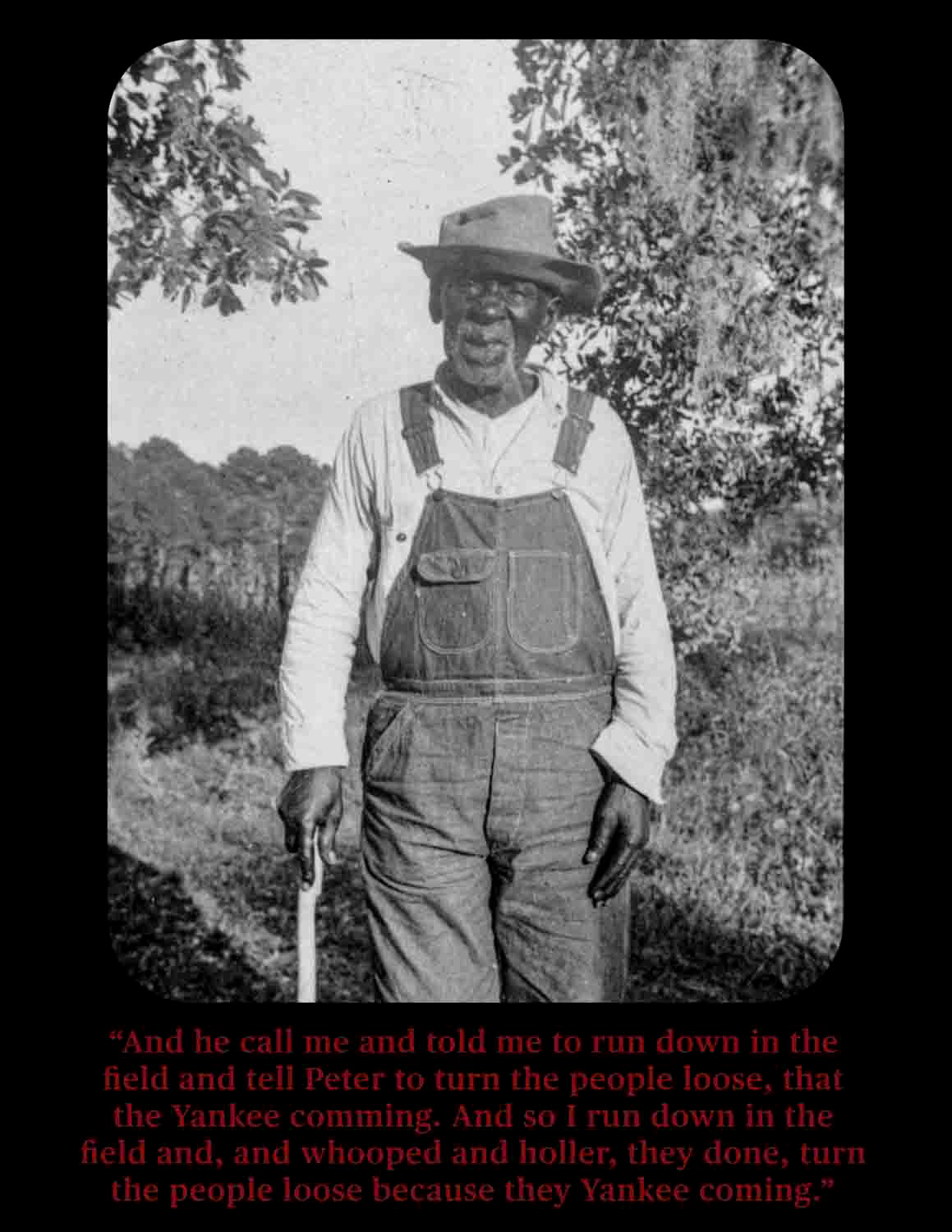
In conjunction with this installation, portraits of three former slaves and their stories emphasize Black peoples’ humanity by incorporating their resilience and their lives outside of slavery. During the 1930s and 1940s, journalists interviewed former slaves and recorded the conversations, leaving an invaluable record. The Library of Congress holds the audio recordings, interviews, and portraits to give a comprehensive look at the era of slavery and the Black American experience that extended into the decades after slavery ended.
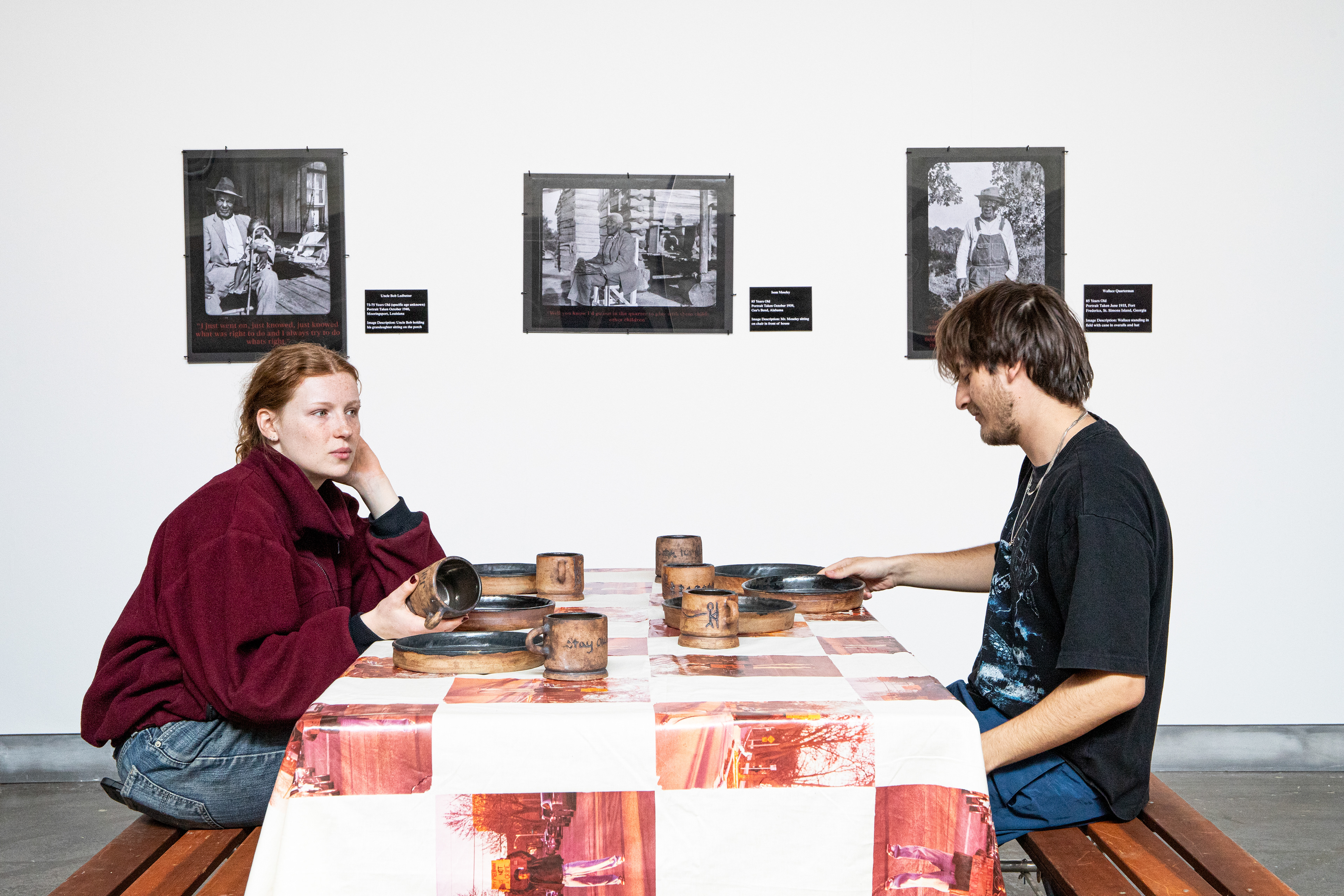
Please have a seat at the picnic table and take in the graphics on the plates, the images on the tablecloth, and the real words from survivors on the wall.